Boston Symphony Orchestra, Charles Munch – Mendelssohn: Symphony No. 4 “Italian” & Symphony No. 5 “Reformation” (2006) [SACD / RCA Red Seal – 82876-71616-2]

Boston Symphony Orchestra, Charles Munch - Mendelssohn: Symphony No. 4 “Italian” & Symphony No. 5 “Reformation” (2006)

Title: Boston Symphony Orchestra, Charles Munch – Mendelssohn: Symphony No. 4 “Italian” & Symphony No. 5 “Reformation” (2006)
Genre: Classical
Format: MCH SACD ISO + Hi-Res FLAC

One has to chuckle at some covers. The picture depicts the Arch of Titus, with what possibly is a pine tree at the edge of the photograph. Yet, when one turns to the jacket of Respighi’s ‘Pines of Rome’ in the same SACD series, what does one see? Very few, if any pines.

This SACD of vintage Munch performances also includes a cherishable bonus, the famous scherzo from the octet. It is interesting to compare the ‘Italian’ symphony to Szell’s 1962 performance, also on SACD. The only deficiency in the Munch is the absence of the first movement exposition repeat, which Szell observes. Szell’s performance could well be described as ‘brilliant’, the outer movements bursting out of the starting blocks and maintaining this pace to the end. Some might find this verging on the militant. Munch’s tempi are less fleet. Indeed, all the movements in this disc strike a happy medium. The orchestra is recorded slightly more closely than Szell’s Clevelanders. The string sound of the Boston orchestra consequently sounds fuller. The woodwinds have a slight but appealing nasality which I gather represents the orchestra’s Gallic tinge during the Munch era. The brass has presence and bite, without blare. Throughout the performances of both symphonies, I was reminded of Munch’s conducting of Berlioz. Szell’s phrasing sounds leaner, more streamlined, and aimed to contain longer stretches of music. In contrast, Munch’s style, especially amongst the strings, presents more highly moulded and articulated phrasing. Every now and then, the strings will ‘dig in’ over some notes, before relaxing the pressure to allow details from the woodwind to suddenly shine through. One is reminded here of Berlioz’s orchestration and melodic writing, with the quicksilver and unexpected handovers of melody from one set of instruments to another. This is not to say that Munch’s performance is maverick, nor that he moulds the music in a style at odds with the composer’s intentions. The shifts in emphasis are subtle, but audible if one is alert. In other words, there is more to discover the more one listens, unlike some superficially more exciting renditions. ( Szell is brilliant and not superficial, although charm is jettisoned along the way.) Munch’s inner movements may in principle lean towards the stately, but because of the detailed perspectives, especially from the woodwinds, there is so much of interest that one welcomes unhurried tempi. These comments I aim mainly at the ‘Italian’. I am almost certain he weaves the same individual magic in the ‘Reformation’, but as I barely know the piece, I’m not familiar with the standard interpretative formulae for these nuances. This is the first time I have actually found the ‘Reformation’ symphony semi-interesting, so it must function as an enthusiastic welcome. The sound has remarkable little tape hiss, and is typical of the Boston recordings from this source. The strings are warm and solid, the brass not as piercing and obviously virtuostic as at Chicago, the stereo spread rather wide but without a hole in the middle, the orchestra bathed in a lush but not overresonant acoustic. Copyright © 2006 Ramesh Nair and SA-CD.net ~sa-cd.net

(more…)

3 min read

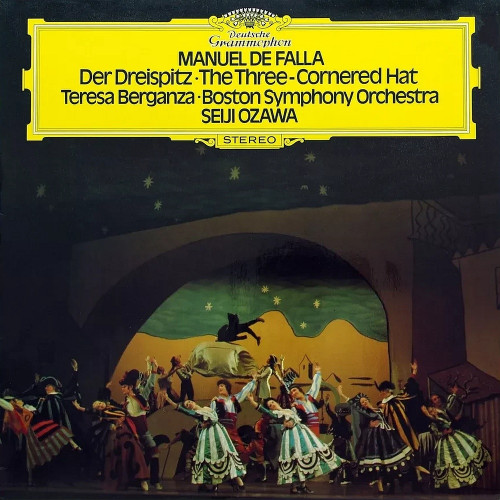
Teresa Berganza, Boston Symphony Orchestra, Seiji Ozawa – Falla: El Sombrero de tres Picos (1976/2015) [SACD / UNIVERSAL MUSIC – UCGG-9077 ]

Teresa Berganza, Boston Symphony Orchestra, Seiji Ozawa - Falla: El Sombrero de tres Picos (1976/2015)

Title: Teresa Berganza, Boston Symphony Orchestra, Seiji Ozawa – Falla: El Sombrero de tres Picos (1976/2015)
Genre: Classical
Format: SACD ISO

Seiji Ozawa Masterpieces SACD ~ SHM Edition: Deutsche Grammophon Series Seiji Ozawa’s legendary analogue recordings are released in SACD ~ SHM format, remastered in DSD. Featuring original jackets and original couplings. The enchanting ‘The Three-Cornered Hat’, where Ozawa drew richly colourful sound from the Boston Symphony Orchestra, makes its debut on SACD. Bergansa’s mezzo-soprano solo adds a floral touch to the performance, inviting listeners into the world of Spain.

(more…)

1 min read

Seiji Ozawa, Boston Symphony Orchestra – Ravel: Orchestral Works (1974) [Reissue 2004] [SACD / PentaTone – PTC 5186 204]

Seiji Ozawa, Boston Symphony Orchestra - Ravel: Orchestral Works (1974) [Reissue 2004]

Title: Seiji Ozawa, Boston Symphony Orchestra – Ravel: Orchestral Works (1974) [Reissue 2004]
Genre: Classical
Format: MCH SACD ISO + Hi-Res FLAC

Every orchestra has a characteristic sound & personality that identifies them through the ages, & in the case of the Boston Symphony Orchestra it is their contoured string & wind elegance, panache & suavity that marks them out as the premier Francophone American orchestra. With Seiji Ozawa at the helm, a conductor much identified with French repertoire, these Quad recordings of Maurice Ravel, accomplished during his long tenure as music director, are afforded the sonic treatment they deserve & are now able to receive given the latest SACD technology employed by Pentatone enabling the release of the full spectrum of sound captured by a previous eras sound engineers.

For classical connoisseurs, multichannel recording is state-of-the-art reproduction, and they regularly seek out the finest recordings in the super audio format. Among those discs are some important discoveries from the past, including rare quadraphonic recordings from the 1970s that are being remastered for the new technology. Seiji Ozawa and the Boston Symphony Orchestra made these quadraphonic recordings of orchestral works by Maurice Ravel in 1974, and they were remastered in 2014 by PentaTone as part of an ongoing project to preserve these early experiments in multichannel sound. Ozawa had a magical touch with Ravel, and his performances with the BSO of Le tombeau de Couperin, Menuet antique, Ma mère l’oye, Valses nobles et sentimentales, and Une barque sur l’océan are among the most transparent interpretations of the period. What quadraphonic recording added were exceptional depth, crisp details, and ideal separation of the parts, so the brilliant solo and sectional writing in Ravel’s scores stood out with the clarity and presence of chamber music. This hybrid SACD can be played on SACD players and conventional CD equipment with stereo playback, but even with that limitation, the spatial dimensions of the orchestra come across with astonishing verisimilitude. Highly recommended as a sonic showcase of the highest quality.

(more…)

2 min read

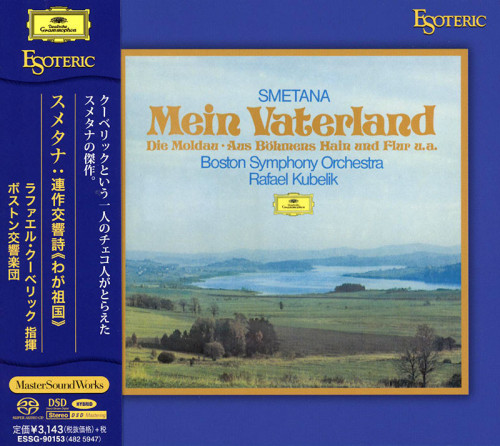
Rafael Kubelik, Boston Symphony Orchestra – Smetana: Má vlast (1971) [Japanese SHM-SACD 2011] [SACD / Deutsche Grammophon – UCGG-9029]

Rafael Kubelik, Boston Symphony Orchestra - Smetana: Má vlast (1971) [Japanese SHM-SACD 2011]

Title: Rafael Kubelik, Boston Symphony Orchestra – Smetana: Má vlast (1971) [Japanese SHM-SACD 2011]
Genre: Classical
Format: SACD ISO

Rafael Kubelík (1914-1996), a Czech-born master of the 20th century who was active internationally, especially in Germany, specialized in the symphonic poem “Our Fatherland” and left five complete recordings of the work. Among them, this recording with the Boston Symphony Orchestra is the one that maintains the ideal balance between recording and performance. [The recording was produced by Emil Berliner Studios in Germany and mastered in DSD in 2011.]

(more…)

1 min read