Denean – The Weaving (1993) [Reissue 2002] [SACD / Top Music International Ltd. – TM-SACD71022.2]

Denean - The Weaving (1993) [Reissue 2002]

Title: Denean – The Weaving (1993) [Reissue 2002]
Genre: New Age
Format: SACD ISO + Hi-Res FLAC

Spiritually enlightened songs delivered through Denean’s angelic voice, similar to that of Enya’s. A wonderful album full of the spirit of the Southwest… A breathtaking, relaxing message of faith through music!

The Weaving, Denean’s latest release, provides a rich complement to her previous, more traditionally oriented Native album Fire Prayer. Melodious piano and synthesizer artfully support Denean’s vibrant vocals on Native chants and English lyrics. Guitar, bass, recorder and drums add dimension to the full sound of this sacred earth music. An album highlight is “Dana of the Winged Ones,” where you hear wingbeats of the majestic eagles that circle overhead in Denean’s neighboring valley.

(more…)

1 min read

BBC Symphony Chorus, BBC Symphony Orchestra, Sir Andrew Davis – Delius: Appalachia, The Song Of The High Hills (2011) [SACD / Chandos – CHSA 5088]

BBC Symphony Chorus, BBC Symphony Orchestra, Sir Andrew Davis - Delius: Appalachia, The Song Of The High Hills (2011)

Title: BBC Symphony Chorus, BBC Symphony Orchestra, Sir Andrew Davis – Delius: Appalachia, The Song Of The High Hills (2011)
Genre: Classical
Format: MCH SACD ISO + Hi-Res FLAC

This release offers a pair of fairly early Delius works; they may not be instantly appealing to those making a start with this idiosyncratic English impressionist, but confirmed fans will love them. The roots of Frederick Delius’ Appalachia lay in his experiences as an orange plantation manager in Florida in the late 1880s, where he heard the singing of African-American laborers and, according to his own testimony, first began to think about becoming a composer. The work is subtitled “Variations on an Old Slave Song with Final Chorus for baritone, chorus, and orchestra,” and everything about it is intriguingly confused. Florida is not part of Appalachia. Nor is the Mississippi River delta, which Delius claimed was the inspiration for the work, but which he apparently never saw. To top it off, the “old slave song” is obscure; Delius, who had firsthand experience of African-American music, may indeed have heard it somewhere, but the text doesn’t appear anywhere in databases of spiritual texts, and apparently no one has discovered the source. The melody, uncharacteristically simple for a spiritual, is stated plainly after a two-part introduction, and then follows a set of variations of all possible shapes and sizes, culminating in a choral finale. The finale gives the advertised baritone soloist precious little to do; he gets to sing just a few bars after cooling his heels on-stage for half an hour. And it introduces the text of the song, which with its “sold down the river” images sounds a bit out of place in the mouths of a substantial English chorus. The BBC Symphony Chorus under Andrew Davis does its best with this, and in general the level of orchestral detail, the heart and soul of a Delius performance, is impressive here. The Song of the High Hills expands on the wordless chorus idea that is introduced in Appalachia, and technically it’s perhaps a more accomplished work. Appalachia, however, truly announced Delius as an original, and it’s the kind of piece you’ll either love or hate depending on your attitude toward the composer’s output in general. In any case, it’s not a terribly common work on CD, and Davis deserves thanks for its resurrection here.

(more…)

3 min read

Dejan Lazic – Liaison Vol.3: Bach, Britten (2011) [SACD / Channel Classics – CCS SA 28511]

Dejan Lazic - Liaison Vol.3: Bach, Britten (2011)

Title: Dejan Lazic – Liaison Vol.3: Bach, Britten (2011)
Genre: Classical
Format: MCH SACD ISO + Hi-Res FLAC

The word liaison can be translated in many ways: affair, affinity, connection, link, relationship, union. The CDs in the Liaisons series each feature 2 particular composers, enabling us to explore their musical worlds, sources of inspiration & degree of influence. At the same time, the recordings reveal their most conspicuous differences & their common denominators.

(more…)

1 min read

Dejan Lazic – Liasons Vol.2: Schumann, Brahms (2009) [SACD / Channel Classics – CCS SA 27609]

Dejan Lazic - Liasons Vol.2: Schumann, Brahms (2009)

Title: Dejan Lazic – Liasons Vol.2: Schumann, Brahms (2009)
Genre: Classical
Format: MCH SACD ISO + Hi-Res FLAC

The early Beethoven, the late Haydn… Where is the borderline between these 2 – what is the connection, what differentiates them? Although their ways of life & characters were clearly different, both masters lived in a time during which it was as important to obey the prescribed musical rules as it was to connect the artists intellect with his creativity, personality, & emotional world.

(more…)

1 min read

Dejan Lazic – Liaisons Vol.1: Scarlatti, Bartok (2007) [SACD / Channel Classics – CCS SA 23407]

Dejan Lazic - Liaisons Vol.1: Scarlatti, Bartok (2007)

Title: Dejan Lazic – Liaisons Vol.1: Scarlatti, Bartok (2007)
Genre: Classical
Format: MCH SACD ISO + Hi-Res FLAC

At 1st sight, they appear to have nothing in common – but disregarding the stylistic elements & a difference of 2 centuries, you soon recognize that both are in a sense, musical architects, who as piano virtuosos were equally interested in miniature forms & inspired by folk music. On the 1 hand you have Scarlatti, who, after moving to Spain in 1729 composed almost exclusively for harpsichord & integrated elements of Spanish folklore into his compositions in an experimental way; on the other hand Bartk, who boosted the recognition of the rich native Hungarian peasant songs to an independent folk art, & was also influenced by Arabic folk music.

(more…)

1 min read

Deitra Farr – Let It Go! (2005) [SACD / JSP Records – JSP5105]

Deitra Farr - Let It Go! (2005)

Title: Deitra Farr – Let It Go! (2005)
Genre: Blues
Format: MCH SACD ISO + Hi-Res FLAC

On this accessible set of romance-themed songs, veteran Chicago blues vocalist Deitra Farr offers dynamic interpretations that frequently dabble in pop and soul. Standout tracks include the melancholy, gospel-tinged tune “Signs, Signals, and Warnings” and the emotive ballad “My Love for You”, both of which highlight Farr’s deep, expressive voice.

The same qualities you could use to describe the persona that blues singer Deitra Farr inhabits in song—independence, self-confidence, a refusal to play on anyone else’s terms—also inform the way she deals with the music business. That might explain why, despite her international reputation and undiminished talents, she hasn’t released a solo album since 2005’s Let It Go! (JSP). Farr melds traditional postwar Chicago blues and fervent deep soul with modern-sounding emotional directness and a panache that few of her contemporaries can match. Let It Go! makes her case: she coaxes fatback funk out of players who usually prefer rootsier fare, like guitarist Billy Flynn, and she runs the emotional gamut from haunted urgency (“In a Dark Place”) to swing-inflected joy (“When They Really Love You”). Even on her most anthemic barn burners, which she delivers with full-hearted ebullience, Farr steers clear of “blooze-mama” posturing. She’s at her best live, so this all-too-rare hometown show is a must-see.

(more…)

2 min read

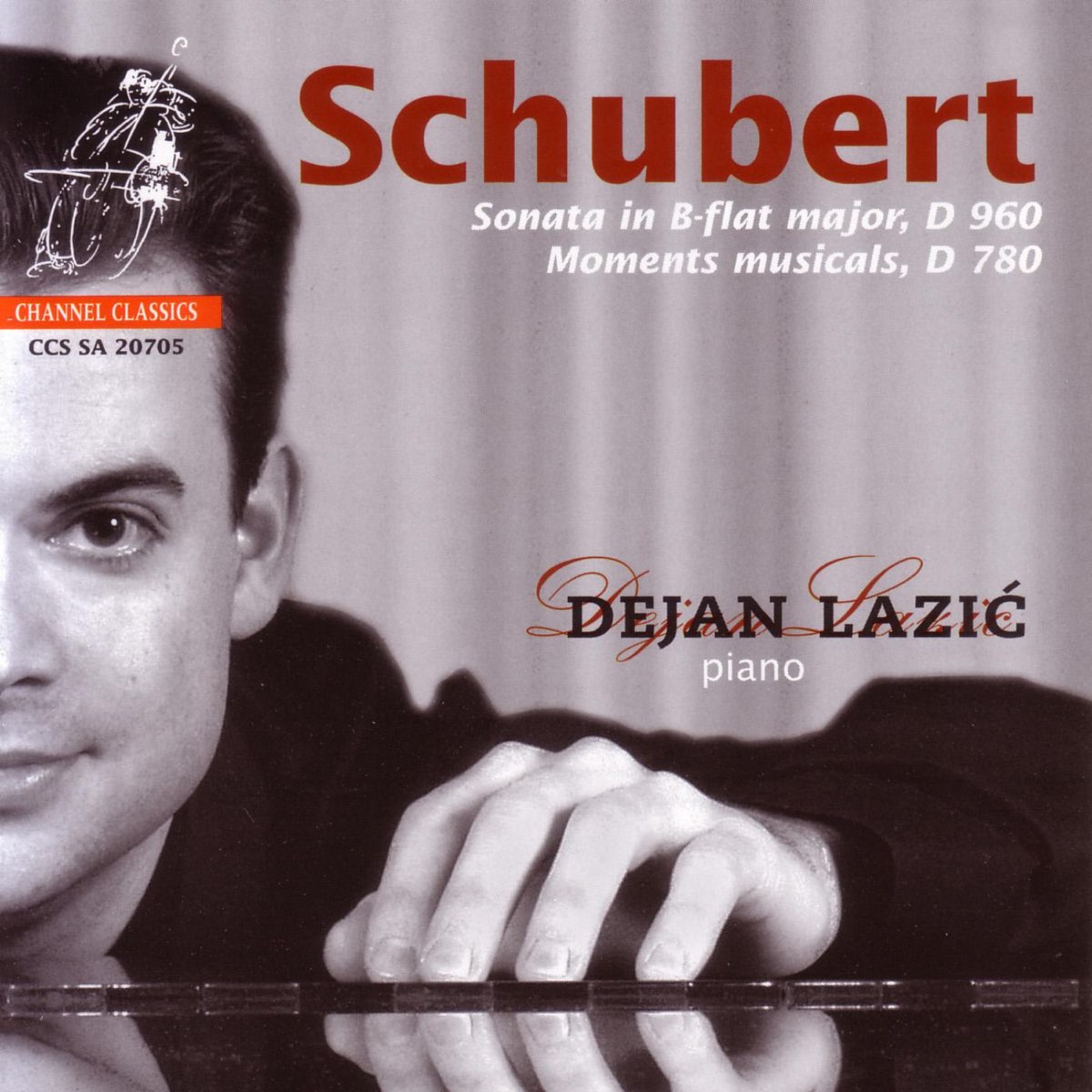
Dejan Lazic – Schubert: Sonata in B-Flat Major & Moments Musicals (2005) [SACD / Channel Classics – CCS SA 20705]

Dejan Lazic - Schubert: Sonata in B-Flat Major & Moments Musicals (2005)

Title: Dejan Lazic – Schubert: Sonata in B-Flat Major & Moments Musicals (2005)
Genre: Classical
Format: MCH SACD ISO + DSF DSD64 + Hi-Res FLAC

Dejan Lazić is one of those pianists who personalizes everything that he does, somewhat like a German stage director who has to have a “concept”. Accordingly, the results can be stimulating, or just plain perverse. Confronting Franz Schubert’s great B-flat major sonata presents a unique series of challenges, because the music itself is so strange, so rich in character, that it tends to be diminished rather than enhanced by an excess of “ideas”, if by this we mean something novel or gratuitous imposed for its own sake. The sonata needs to be realized from within, as it were, and met on its own terms. Happily, Lazic clearly understands this and does what any outstanding interpreter of this music must: he simply loses himself in the work, letting us hear Schubert speak through Lazić, rather than the other way around.

You know what’s cool about Dejan Lazic’s Schubert B flat major Sonata? He doesn’t try to beat the masters at their own game. He doesn’t try to out-drama Schnabel or out-intensity Richter or out-slick Brendel or out-think Pollini or out-sing Kovacevich. Dejan Lazic, a young Croatian pianist, doesn’t have to. He’s got his own way of doing things, his own point of view, and his own way of singing Schubert’s great song of life and love and death. It’s passionate, sure, but Lazic’s a young man and can’t help himself. More importantly, it sounds completely thought through. Lazic knows that no matter how long the heavenly lengths of the work, the performer has to know exactly how he or she is going to get from one end of it to the other. More importantly yet, it sounds completely improvised. Lazic knows that no matter how familiar he is with the work, its bottomless depths and endless heights will always confound the traveler through its heavenly lengths and the performer always has to be ready to go with the inspiration of the moment. But most importantly of all, Lazic sounds like he’s completely at one with the music. Length, height, depth: all these are measurements. In the end, Lazic knows that it was the qualities beyond them, Schubert’s heart and soul and spirit, that make the B flat Sonata one of the most precious of all piano sonatas. Lazic’s “filler,” the set of Six Moments Musicaux, are nearly in the same league: sweet, bitter, funny, quaint, coy, and utterly endearing. A terrific performance, especially as preserved in Channel Classics’ clear and translucent sound.

(more…)

3 min read

Dejan Lazić, Atlanta Symphony Orchestra, Robert Spano – Brahms: Piano Concerto No. 3 (2010) [SACD / Channel Classics – CCS SA 29410]

Dejan Lazić, Atlanta Symphony Orchestra, Robert Spano - Brahms: Piano Concerto No. 3 (2010)

Title: Dejan Lazić, Atlanta Symphony Orchestra, Robert Spano – Brahms: Piano Concerto No. 3 (2010)
Genre: Classical
Format: MCH SACD ISO + DSF DSD64 + Hi-Res FLAC

Channel Classics presents the world premiere recording of Dejan Lazić’s arrangement for piano and orchestra of Johannes Brahms beloved violin concerto. Recorded live with the Atlanta Symphony Orchestra led by Robert Spano, the work’s creation was driven by two major inspirations. One was keyboard arrangements of violin concertos by Bach and Beethoven that were penned by the composers and the other was Brahms own countless arrangements and transcriptions of his and other composers works. Although Lazić completely re-wrote and re-thought the solo part, penning it in a clearly recognizable Brahmsian style and adding his own cadenza, the orchestral score remains entirely unchanged. Ultimately, Lazić’s goal was to translate Brahms’s unique musical language into a new setting without losing any of its original musical value and, in addition,to give pianists an equal chance to perform and enjoy this wonderful music. After hearing it, you will agree that there is a strong possibility that his goal will come to fruition.

In the notes accompanying this recording, Dejan Lazic points to the transcriptions for keyboard of Bach’s and Beethoven’s violin concertos as inspiration for his own piano arrangement of Brahms’ Violin Concerto. It is rare that something as large as a full concerto is arranged for a different instrument, but Lazic took on the challenge for two reasons: he loves the music and Brahms was a pianist who wrote as a pianist. Lazic went back to Brahms’ correspondence with the violinist for whom he wrote the concerto, Joseph Joachim, in essence to reverse-engineer the soloist’s part and rebuild it for the piano. Lazic’s arrangement generally works well. There is nothing missing in terms of the melodies, harmonies, and emotion; anyone who is familiar with the Violin Concerto will immediately recognize this. Looking deeper, however, it seems like the contrapuntal nature of the piano isn’t used to its full advantage often enough; in other words, there are numerous times when the left hand is just a note-for-note harmony of the right’s melody. The pianistic writing of Lazic’s cadenza and other passages could have been used even further to make the concerto sound more native to the instrument. Another detraction is when Lazic is obviously trying to imitate the articulation of the violinist’s double- and triple-stops in declamatory passages. On the piano it comes out as choppy chords. Robert Spano and the Atlanta Symphony tend to stay out of Lazic’s way, allowing the piano to take the spotlight, and the recording’s sound is good, if slightly shallow. The disc is filled out with Lazic playing the solo Rhapsodies, Op. 79, and Scherzo, Op. 4, where the sound is closer, a little richer, and captures the nuances of his playing. On the whole, this is not recommended for the purists among Brahms’ lovers and pianists, but it is of interest to those who are open to sampling other possibilities.

(more…)

3 min read

Deep Purple & The Royal Philharmonic Orchestra – Concerto For Group And Orchestra (1969) [Reissue 2002] [SACD / Harvest – 7243-541009-2]

Deep Purple & The Royal Philharmonic Orchestra - Concerto For Group And Orchestra (1969) [Reissue 2002]

Title: Deep Purple & The Royal Philharmonic Orchestra – Concerto For Group And Orchestra (1969) [Reissue 2002]
Genre: Classical, Hard Rock, Symphonic Rock
Format: MCH SACD ISO + Hi-Res FLAC

Back in 1970, it seemed as though any British group that could was starting to utilize classical elements in their work — for some, like ELP, that meant quoting from the classics as often and loudly as possible, while for others, like Yes, it meant incorporating classical structures into their albums and songs. Deep Purple, at the behest of keyboardman Jon Lord, fell briefly into the camp of this offshoot of early progressive rock with the Concerto for Group and Orchestra. For most fans, the album represented the nadir of the classic (i.e., post-Rod Evans) group: minutes of orchestral meandering lead into some perfectly good hard rock jamming by the band, but the trip is almost not worth the effort. Ritchie Blackmore sounds great and plays his heart out, and you can tell this band is going to go somewhere, just by virtue of the energy that they put into these extended pieces. The classical influences mostly seem drawn from movie music composers Dimitri Tiomkin and Franz Waxman (and Elmer Bernstein), with some nods to Rachmaninoff, Sibelius, and Mahler, and they rather just lay there. Buried in the middle of the second movement is a perfectly good song, but you’ve got to get to it through eight minutes of orchestral noodling on either side. The third movement is almost bracing enough to make up for the flaws of the other two, though by itself, it wouldn’t make the album worthwhile — Pink Floyd proved far more adept at mixing group and orchestra, and making long, slow, lugubrious pieces interesting. As a bonus, however, the producers have added a pair of hard rock numbers by the group alone, “Wring That Neck” and “Child in Time,” that were played at the same concert. They and the third movement of the established piece make this worth a listen.

(more…)

2 min read

Deep Purple – Machine Head (1972) [Japanese SACD 2011] [SACD / Warner Music – WPCR-14166]

Deep Purple - Machine Head (1972) [Japanese SACD 2011]

Title: Deep Purple – Machine Head (1972) [Japanese SACD 2011]
Genre: Hard Rock
Format: MCH SACD ISO + Hi-Res FLAC

Released in 1972, Deep Purple’s best-selling album remains a landmark hard rock recording. The album hit #1 in the UK and #7 in the US and was eventually certified Double Platinum. Along with Led Zeppelin and Black Sabbath, Deep Purple-—particularly Machine Head-—paved the way for countless progressive rock bands who followed in their wake.

(more…)

1 min read