John Coltrane – My Favorite Things (1961) [Reissue 2013] [SACD / ORG Music – ORGM-1080]

John Coltrane - My Favorite Things (1961) [Reissue 2013]

Title: John Coltrane – My Favorite Things (1961) [Reissue 2013]
Genre: Jazz
Format: SACD ISO + Hi-Res FLAC

Although seemingly impossible to comprehend, this landmark jazz date made in 1960 was recorded in less than three days. All the more remarkable is that the same sessions which yielded My Favorite Things would also inform a majority of the albums Coltrane Plays the Blues, Coltrane’s Sound, and Coltrane Legacy. It is easy to understand the appeal that these sides continue to hold. The unforced, practically casual soloing styles of the assembled quartet — which includes Coltrane (soprano/tenor sax), McCoy Tyner (piano), Steve Davis (bass), and Elvin Jones (drums) — allow for tastefully executed passages à la the Miles Davis Quintet, a trait Coltrane no doubt honed during his tenure in that band. Each track of this album is a joy to revisit. The ultimate listenability may reside in this quartet’s capacity to not be overwhelmed by the soloist. Likewise, they are able to push the grooves along surreptitiously and unfettered. For instance, the support that the trio — most notably Tyner — gives to Coltrane on the title track winds the melody in and around itself. However, instead of becoming entangled and directionless, these musical sidebars simultaneously define the direction the song is taking. As a soloist, the definitive soprano sax runs during the Cole Porter standard “Everytime We Say Goodbye” and tenor solos on “But Not for Me” easily establish Coltrane as a pioneer of both instruments.

(more…)

2 min read

John Coltrane – My Favorite Things (1961) [Japanese SHM-SACD ‘2011] [MONO] [SACD / Atlantic – WPGR-10001]

John Coltrane - My Favorite Things (1961) [Japanese SHM-SACD ‘2011] [MONO]

Title: John Coltrane – My Favorite Things (1961) [Japanese SHM-SACD ‘2011] [MONO]
Genre: Jazz
Format: SACD ISO + Hi-Res FLAC

Although seemingly impossible to comprehend, this landmark jazz date made in 1960 was recorded in less than three days. All the more remarkable is that the same sessions which yielded My Favorite Things would also inform a majority of the albums Coltrane Plays the Blues, Coltrane’s Sound, and Coltrane Legacy. It is easy to understand the appeal that these sides continue to hold. The unforced, practically casual soloing styles of the assembled quartet — which includes Coltrane (soprano/tenor sax), McCoy Tyner (piano), Steve Davis (bass), and Elvin Jones (drums) — allow for tastefully executed passages à la the Miles Davis Quintet, a trait Coltrane no doubt honed during his tenure in that band. Each track of this album is a joy to revisit. The ultimate listenability may reside in this quartet’s capacity to not be overwhelmed by the soloist. Likewise, they are able to push the grooves along surreptitiously and unfettered. For instance, the support that the trio — most notably Tyner — gives to Coltrane on the title track winds the melody in and around itself. However, instead of becoming entangled and directionless, these musical sidebars simultaneously define the direction the song is taking. As a soloist, the definitive soprano sax runs during the Cole Porter standard “Everytime We Say Goodbye” and tenor solos on “But Not for Me” easily establish Coltrane as a pioneer of both instruments.

(more…)

2 min read

John Coltrane – Lush Life (1961) {1957-58 Recordings} [Fantasy Remaster ‘2003] [SACD / Prestige – PRSA-7188-6]

John Coltrane - Lush Life (1961) {1957-58 Recordings} [Fantasy Remaster ‘2003]

Title: John Coltrane – Lush Life (1961) {1957-58 Recordings} [Fantasy Remaster ‘2003]
Genre: Jazz
Format: SACD ISO + Hi-Res FLAC

When he recorded Lush Life, John Coltrane was rapidly gaining recognition for his innovations in jazz soloing. As a member of the Miles Davis Quintet, he had become known far beyond a small circle of jazz insiders. Coltrane’s development as a soloist came at a pace and an intensity seldom witnessed in jazz. It was immeasurably aided by two factors: He jettisoned his drug and alcohol habits and, during a hiatus from the Davis band, he worked with Thelonious Monk. The boldness and daring that began to characterize Coltrane’s playing during the Monk period are evident here in three pieces on which he is accompanied only by bass and drums. Freeing his astonishing creativity from the imposed harmonies of a piano, he employs his massive technique to put into standard song and blues forms nearly all that they could contain. In two pieces with pianist Red Garland, his colleague from the Davis group, Coltrane is scarcely less inventive. The clarity and definition of SA-CD technology make the intimacy of Coltrane’s style seem even more conversational.

Lush Life (1958) is among John Coltrane’s best endeavors on the Prestige label. One reason can easily be attributed to the interesting personnel and the subsequent lack of a keyboard player for the August 16, 1957 session that yielded the majority of the material. Coltrane (tenor sax) had to essentially lead the compact trio of himself, Earl May (bass), and Art Taylor (drums). The intimate setting is perfect for ballads such as the opener “Like Someone in Love.” Coltrane doesn’t have to supplement the frequent redundancy inherent in pianists, so he has plenty of room to express himself through simple and ornate passages. Unifying the slippery syncopation and slightly Eastern feel of “I Love You” is the tenor’s prevalent capacity for flawless, if not downright inspired on-the-spot “head” arrangements that emerge singular and clear, never sounding preconceived. Even at an accelerated pace, the rhythm section ably prods the backbeat without interfering. A careful comparison will reveal that “Trane’s Slo Blues” is actually a fairly evident derivation (or possibly a different take) of “Slowtrane.” But don’t let the title fool you as the mid-tempo blues is undergirded by a lightheartedness. May provides a platform for Coltrane’s even keeled runs before the tenor drops out, allowing both May and then Taylor a chance to shine. The fun cat-and-mouse-like antics continue as Taylor can be heard encouraging the tenor player to raise the stakes and the tempo — which he does to great effect. The practically quarter-hour reading of Billy Strayhorn’s “Lush Life” is not only the focal point of this album, it is rightfully considered as one of Coltrane’s unqualified masterworks. The performance hails from January 10, 1958 as Coltrane sits in with Red Garland (piano), Donald Byrd (trumpet), Paul Chambers (bass), and Louis Hayes (drums). Coltrane handles the tune’s delicate complexities with infinite style and finesse. Garland similarly sparkles at the 88s, while Byrd’s solo offers a bit of a tonal alternative. It should be noted that the reading here does not include a vocal from Johnny Hartman. That version can be found on the ever imaginatively monikered John Coltrane & Johnny Hartman (1963).

(more…)

3 min read

John Coltrane – John Coltrane Quartet Plays (1965) [Analogue Productions 2011] [SACD / Analogue Productions – CIPJ 85 SA]

John Coltrane - John Coltrane Quartet Plays (1965) [Analogue Productions 2011]

Title: John Coltrane – John Coltrane Quartet Plays (1965) [Analogue Productions 2011]
Genre: Jazz
Format: SACD ISO + Hi-Res FLAC

One of the turning points in the career of John Coltrane came in 1965. The great saxophonist, whose playing was always very explorative and searching, crossed the line into atonality during that year, playing very free improvisations (after stating quick throwaway themes) that were full of passion and fury. This particular studio album has two standards (a stirring “Chim Chim Cheree” and “Nature Boy”) along with two recent Coltrane originals (“Brazilia” and “Song of Praise”). Art Davis plays the second bass on “Nature Boy,” but otherwise this set (a perfect introduction for listeners to Coltrane’s last period) features the classic quartet comprised of the leader, pianist McCoy Tyner, bassist Jimmy Garrison, and drummer Elvin Jones.

(more…)

1 min read

John Coltrane – Giant Steps (1960) [Japanese SHM-SACD ‘2011] [MONO] [SACD / Atlantic – WPGR-10006]

John Coltrane - Giant Steps (1960) [Japanese SHM-SACD ‘2011] [MONO]

Title: John Coltrane – Giant Steps (1960) [Japanese SHM-SACD ‘2011] [MONO]
Genre: Jazz
Format: SACD ISO + Hi-Res FLAC

History will undoubtedly enshrine this disc as a watershed the likes of which may never truly be appreciated. Giant Steps bore the double-edged sword of furthering the cause of the music as well as delivering it to an increasingly mainstream audience. Although this was John Coltrane’s debut for Atlantic, he was concurrently performing and recording with Miles Davis. Within the space of less than three weeks, Coltrane would complete his work with Davis and company on another genre-defining disc, Kind of Blue, before commencing his efforts on this one. Coltrane (tenor sax) is flanked by essentially two different trios. Recording commenced in early May of 1959 with a pair of sessions that featured Tommy Flanagan (piano) and Art Taylor (drums), as well as Paul Chambers — who was the only bandmember other than Coltrane to have performed on every date. When recording resumed in December of that year, Wynton Kelly (piano) and Jimmy Cobb (drums) were instated — replicating the lineup featured on Kind of Blue, sans Miles Davis of course. At the heart of these recordings, however, is the laser-beam focus of Coltrane’s tenor solos. All seven pieces issued on the original Giant Steps are likewise Coltrane compositions. He was, in essence, beginning to rewrite the jazz canon with material that would be centered on solos — the 180-degree antithesis of the art form up to that point. These arrangements would create a place for the solo to become infinitely more compelling. This would culminate in a frenetic performance style that noted jazz journalist Ira Gitler accurately dubbed “sheets of sound.” Coltrane’s polytonal torrents extricate the amicable and otherwise cordial solos that had begun decaying the very exigency of the genre — turning it into the equivalent of easy listening. He wastes no time as the disc’s title track immediately indicates a progression from which there would be no looking back. Line upon line of highly cerebral improvisation snake between the melody and solos, practically fusing the two. The resolute intensity of “Countdown” does more to modernize jazz in 141 seconds than many artists do in their entire careers. Tellingly, the contrasting and ultimately pastoral “Naima” was the last tune to be recorded, and is the only track on the original long-player to feature the Kind of Blue quartet. What is lost in tempo is more than recouped in intrinsic melodic beauty.

(more…)

3 min read

John Coltrane – Coltrane (1962) [Analogue Productions 2010] [SACD / Analogue Productions – CIPJ 21 SA]

John Coltrane - Coltrane (1962) [Analogue Productions 2010]

Title: John Coltrane – Coltrane (1962) [Analogue Productions 2010]
Genre: Jazz
Format: SACD ISO + Hi-Res FLAC

Considered by many to be his finest single album, Coltrane finds John Coltrane displaying all of the exciting elements that sparked brilliance and allowed his fully formed instrumental voice to shine through in the most illuminating manner. On tenor saxophone, he’s simply masterful, offering the burgeoning sheets of sound philosophy into endless weavings of melodic and tuneful displays of inventive, thoughtful, driven phrases. Coltrane also plays a bit of soprano saxophone as a primer for his more exploratory work to follow. Meanwhile, bassist Jimmy Garrison, drummer Elvin Jones, and especially the stellar McCoy Tyner have integrated their passionate dynamics into the inner whole of the quartet. The result is a most focused effort, a relatively popular session to both his fans or latecomers, with five selections that are brilliantly conceived and rendered. “Out of This World,” at over 14 minutes in modal trim, is a powerful statement, stretched over Tyner’s marvelous and deft chords, the churning rhythms conjured by Jones, and the vocal style Coltrane utilizes as he circles the wagons on this classic melody, including a nifty key change. “Tunji” is a mysterious, easily rendered piece in 4/4 which speaks to the spiritual path Coltrane tred, a bit riled up at times while Tyner remains serene. Hard bop is still in the back of their collective minds during “Miles’ Mode,” a sliver of a melody that jumps into jam mode in a free-for-all blowing session, while the converse is to be found in Mal Waldron’s “Soul Eyes,” the quintessential ballad and impressive here for the way Coltrane’s holds notes, emotion, and expressive intellectuality. On soprano you can tell Coltrane is close to taking complete control of his newly found voicings, as a playful, jaunty “The Inch Worm” in 3/4 time is only slightly strained, but in which he finds complete communion with the others. Even more than any platitudes one can heap on this extraordinary recording, it historically falls between the albums Olé Coltrane and Impressions — completing a triad of studio efforts that are as definitive as anything Coltrane ever produced, and highly representative of him in his prime.
https://www.discogs.com/release/3359460-The-John-Coltrane-Quartette-Coltrane

(more…)

2 min read

John Coltrane – Coltrane (1957) [Analogue Productions 2012] [SACD / Analogue Productions – CPRJ 7105 SA]

John Coltrane - Coltrane (1957) [Analogue Productions 2012]

Title: John Coltrane – Coltrane (1957) [Analogue Productions 2012]
Genre: Jazz
Format: SACD ISO + Hi-Res FLAC

On his first session as a bandleader, tenor saxophonist John Coltrane is joined by Johnny Splawn on trumpet, Sahib Shihab on baritone sax, and a rhythm section of bassist Paul Chambers and drummer Albert “Tootie” Heath with piano duties split between Mal Waldron and Red Garland. Right out of the gate, the propulsive syncopated beat that drives through the heart of Coltrane’s fellow Philly denizen Calvin Massey’s “Bakai” indicates that Coltrane and company are playing for keeps. Shihab’s emphatic and repetitive drone provides a manic urgency that fuels the participants as they weave in and out of the trance-like chorus. Coltrane grabs hold with bright and aggressive lines, turning the minor-chord progressions around into a spirited and soulful outing. While the refined and elegant “Violets for Your Furs” as well as the slinky and surreptitious “While My Lady Sleeps” are undeniably ballads, they aren’t redundant. Rather, each complements the other with somewhat alternate approaches. “Violets for Your Furs” develops the role of the more traditional pop standard, whereas the somnolence is disrupted by the tension and release coursing just below the surface of “While My Lady Sleeps.” The Coltrane-supplied “Straight Street” is replete with the angular progressions that would become his stock-in-trade. In fact, the short clusters of notes that Coltrane unleashes are unmistakable beacons pointing toward his singular harmonics and impeccably timed phrasing on 1960’s Giant Steps and beyond. The closer, “Chronic Blues,” demonstrates Coltrane’s increasing capacity for writing and arranging for an ensemble. The thick unified sound of Coltrane, Splawn, and Shihab presents a formidable presence as they blow the minor-chord blues chorus together before dissolving into respective solos. The trio’s divergent styles prominently rise, pitting Shihab’s down-and-dirty growl against Coltrane’s comparatively sweet tones and Splawn’s vacillating cool and fiery fingering. Regardless of the listener’s expertise, Coltrane is as enjoyable as it is thoroughly accessible.

(more…)

2 min read

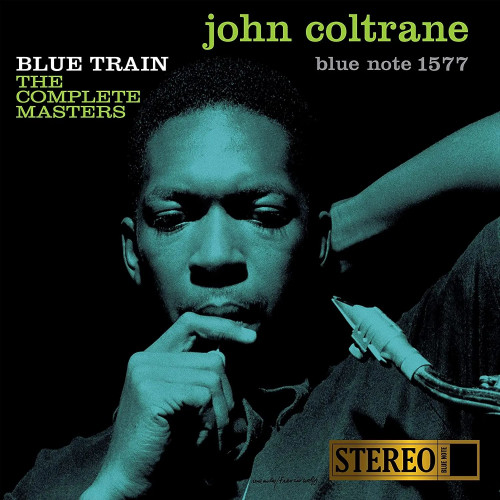
John Coltrane – Blue Train: The Complete Masters (Remastered, Special Edition) (1957/2022) [SACD / Blue Note – UCGQ-9030]

John Coltrane - Blue Train: The Complete Masters (Remastered, Special Edition) (1957/2022)

Title: John Coltrane – Blue Train: The Complete Masters (Remastered, Special Edition) (1957/2022)
Genre: Jazz
Format: SACD ISO

A Historic Discovery! A definitive collection marking the 65th anniversary of the recording of *Blue Train*, featuring previously unreleased takes including the very first recordings! 

 *Blue Train* is the timeless masterpiece recorded by John Coltrane in 1957—his only album as bandleader for Blue Note. Though it is one of the most popular works in jazz history, to commemorate the 65th anniversary of its recording, the release of the definitive edition *Blue Train: Complete Masters* has been announced. This edition features the original album with the latest remastering, plus seven alternate takes. Four of these seven alternate takes are making their absolute debut on this release—a historic discovery. The original album’s monaural version will also be released simultaneously with the latest remastering. 

This release is part of Blue Note’s recent reissue series, “Tone Poet.” Under the supervision of producer John Harley—known as the “Poet of Sound”—mastering expert Kevin Gray has meticulously remastered the original analog masters.

Commenting on this release, John Harrell stated, “There is no studio experience that rivals the thrill of listening to the original masters of *Blue Train* (mono, stereo, and alternate takes). I consider these two new versions to be the definitive editions of this legendary performance by John Coltrane.” Additionally, Ashley Kahn, who wrote the new liner notes for this release, notes in the liner notes: “‘Blue Train’ was a recording that Coltrane, who was always self-critical and modest, held in high regard. In 1960, during his final tour with Miles Davis, when a Swedish DJ asked Coltrane what he liked best in his catalog, he replied immediately: ‘Oh, I like Blue Train. It’s got a good band on it. It was a good recording,’ he said.”

In 1957, Coltrane hit rock bottom after being fired from the Miles Davis Quintet due to his heroin addiction. However, a long-term collaboration with Thelonious Monk at the Five Spot Café served as the catalyst for him to kick his heroin habit, and he began performing with passion once again. “Blue Train” is a rare masterpiece created by Coltrane following this miraculous comeback. It became not only one of his early signature works, of which he himself was deeply proud, but also an eternal classic in the history of jazz. This discovery is set to be a truly historic event, revealing the full scope of this masterpiece for the first time.

(more…)

3 min read

John Coltrane – Blue Train (1957) [Reissue 2003] [SACD / Blue Note – 7243 5 41757 2 5]

John Coltrane - Blue Train (1957) [Reissue 2003]

Title: John Coltrane – Blue Train (1957) [Reissue 2003]
Genre: Jazz
Format: SACD ISO + Hi-Res FLAC

Although never formally signed, an oral agreement between John Coltrane and Blue Note Records founder Alfred Lion was indeed honored on Blue Train — Coltrane’s only collection of sides as a principal artist for the venerable label. The disc is packed solid with sonic evidence of Coltrane’s innate leadership abilities. He not only addresses the tunes at hand, but also simultaneously reinvents himself as a multifaceted interpreter of both hard bop as well as sensitive balladry — touching upon all forms in between. The personnel on Blue Train is arguably as impressive as what they’re playing. Joining Coltrane (tenor sax) are Lee Morgan (trumpet), Curtis Fuller (trombone), Kenny Drew (piano), Paul Chambers (bass), and Philly Joe Jones (drums). The triple horn arrangements incorporate an additional sonic density that remains a trademark unique to both this band and album. Of particular note is Fuller’s even-toned trombone, which bops throughout the title track as well as the frenetic “Moments Notice.” Other solos include Paul Chambers’ subtly understated riffs on “Blue Train” as well as the high energy and impact from contributions by Lee Morgan and Kenny Drew during “Locomotion.” The track likewise features some brief but vital contributions from Philly Joe Jones — whose efforts throughout the record stand among his personal best. Of the five sides that comprise the original Blue Train, the Jerome Kern/Johnny Mercer ballad “I’m Old Fashioned” is the only standard; in terms of unadulterated sentiment, this version is arguably untouchable. Fuller’s rich tones and Drew’s tastefully executed solos cleanly wrap around Jones’ steadily languid rhythms. Without reservation, Blue Train can easily be considered in and among the most important and influential entries not only of John Coltrane’s career, but of the entire genre of jazz music as well.

(more…)

2 min read

John Coltrane and Johnny Hartman – John Coltrane and Johnny Hartman (1963) [Reissue 2004] [SACD / Impulse! – B0001126-16]

John Coltrane and Johnny Hartman - John Coltrane and Johnny Hartman (1963) [Reissue 2004]

Title: John Coltrane and Johnny Hartman – John Coltrane and Johnny Hartman (1963) [Reissue 2004]
Genre: Jazz
Format: SACD ISO + Hi-Res FLAC

John Coltrane’s matchup with singer Johnny Hartman, although quite unexpected, works extremely well. Hartman was in prime form on the six ballads, and his versions of “Lush Life” and “My One and Only Love” have never been topped. Coltrane’s playing throughout the session is beautiful, sympathetic, and still exploratory; he sticks exclusively to tenor on the date. At only half an hour, one wishes there were twice as much music, but what is here is classic, essential for all jazz collections.

(more…)

1 min read