Hideto Kanai Quintet – Concierto De Aranjuez (1978) [Japan 2006] [SACD / Three Blind Mice – MHCP 10034]

Hideto Kanai Quintet - Concierto De Aranjuez (1978) [Japan 2006]

Title: Hideto Kanai Quintet – Concierto De Aranjuez (1978) [Japan 2006]
Genre: Jazz
Format: SACD ISO + Hi-Res FLAC

Bassist Hideto Kanai has been leading the progressive jazz scene in Japan since the 1960s (see Masayuki Takayanagi’s Ginparis Session), and this 1978 recording is considered as one of his major achievements. Kanai’s regular group, consisting of three young Japanese musicians and an American expat drummer Michael Reznikoff, recorded four long numbers – ranging from six to 13 minutes each – within just six hours. “Mr. Gabe” and “Silk Road” are original compositions by Kanai. The searching and experimental quality of their performance clearly shows that they have gone through the free jazz movement, but it is not totally atonal nor without structure.

(more…)

1 min read

Hideto Kanai Group – Q (1971) [Japan 2007] [SACD / Three Blind Mice – MHCP 10045]

Hideto Kanai Group - Q (1971) [Japan 2007]

Title: Hideto Kanai Group – Q (1971) [Japan 2007]
Genre: Jazz
Format: SACD ISO + Hi-Res FLAC

The sixth album released by Three Blind Mice turned the spotlight on Hideto Kanai a veteran bassist who had been pursuing a very progressive, unique and uncompromising kind of jazz since the early 1960s. With his passion for educating young musicians and adventurous nature, Kanai has drawn some comparisons to another great leader, Charles Mingus, whom he respected.

The four performances in this album are all free-oriented and may be challenging for some listeners, but they riveting, fascinating, and ultimately satisfying. The opening and closing numbers were actually quite “composed.” In an interesting collaboration with contemporary composers (from the world of classical music), Shuko Mizuno wrote “April” and Hiroshi Nanatsuya wrote “Meditation” specially for this group.

(more…)

1 min read

Hidehiko Matsumoto Quartet – Sleepy (1976) [Japan 2006] [SACD / Three Blind Mice – MHCP 10032]

Hidehiko Matsumoto Quartet - Sleepy (1976) [Japan 2006]

Title: Hidehiko Matsumoto Quartet – Sleepy (1976) [Japan 2006]
Genre: Jazz
Format: SACD ISO + Hi-Res FLAC

Hidehiko “Sleepy” Matsumoto was one of the best jazz sax players in Japan. His nickname was given by an American soldier when he was playing in a US military camp after the war. A true giant on tenor and flute, his contributions to the jazz industry of Japan were many and recognized by many awards and honors. This record, made in 1976 in a one-horn quartet setting, showcases Matsumoto’s brilliant playing on both tenor saxophone and flute. He is a true master of both instruments and it is a great pleasure to hear him beautifully recorded by the people of Three Blind Mice label. A masterpiece, with great sound.

(more…)

1 min read

Hidefumi Toki Quartet – Toki (1975) [Japan 2006] [SACD / Three Blind Mice – MHCP 10027]

Hidefumi Toki Quartet - Toki (1975) [Japan 2006]

Title: Hidefumi Toki Quartet – Toki (1975) [Japan 2006]
Genre: Jazz
Format: SACD ISO + Hi-Res FLAC

Hidefumi Toki is one of the prominent alto saxophonists in Japan. Born in 1950, he had formal and classical musical education on clarinet in high school and saxophone in college. Although he eventually quit school to become a full-time jazz musician, some say that his classical training helped him acquire his beautiful tone. Recorded in 1975 for Three Blind Mice, this debut album featured his superb regular group at the time, a pianoless quartet including the incredible Kazumi Watanabe on guitar, Nobuyoshi Ino on bass and an American expat Steve Jackson on drums.

Toki’s beautiful alto and soprano soar on his own compositions (“Lullaby for the Girl,” “Darkness” and “Old Song Blues”) as well as Ornette Coleman’s “Blues.” Watanabe’s backing and chord work is so adept and sophisticated that at first listen you’d not even realize that there’s no pianist on this set. According to the producer’s note, all numbers except one were completed in one take and the entire session lasted less than four hours! You can actually tell the young musicians were so in tune with each other and on fire! This is one heck of a rousing, swinging, powerful jazz album.

(more…)

2 min read

Hideaki Yoshioka Trio – Moment To Moment (2000) [Japan 2018] [SACD / Venus Records – VHGD-286]

Hideaki Yoshioka Trio - Moment To Moment (2000) [Japan 2018]

Title: Hideaki Yoshioka Trio – Moment To Moment (2000) [Japan 2018]
Genre: Jazz
Format: SACD ISO + DSF DSD64 + Hi-Res FLAC

Funky jazz pianist Yoshioka Hideaki’s long-awaited first East Coast recording. Hideaki plays with Jamir Nasser and Jimmy Cobb who he was eager to co-star most. Includes “Don’t Take Your Love From Me”, “Blowin’ The Blues Away”, “Some One To Light Up My Life”, “Harlem Blues” and “Moment To Moment”, plus two Yoshioka originals. Recorded at Rudy Van Gelder Studio.

(more…)

1 min read

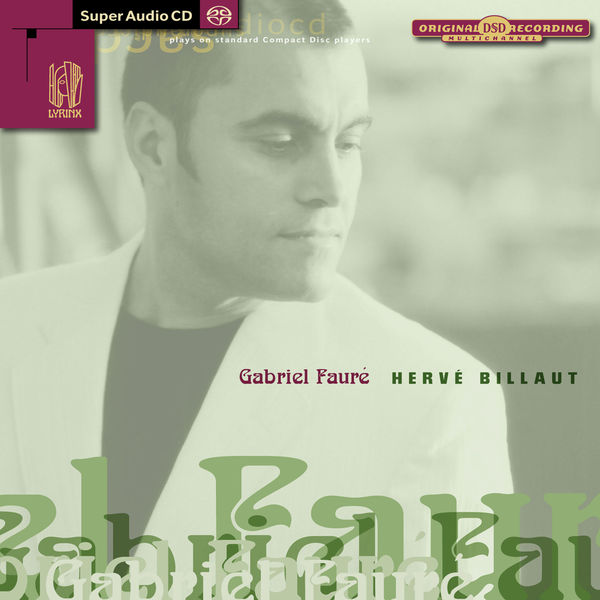
Herve Billaut – Gabriel Faure (2007) [SACD / Lyrinx – LYR 2253]

Herve Billaut - Gabriel Faure (2007)

Title: Herve Billaut – Gabriel Faure (2007)
Genre: Classical
Format: MCH SACD ISO + DSF DSD64 + Hi-Res FLAC

Hervé Billaut is a French classical pianist. For this release for Lyrinx label he is performed the classical works by Gabriel Fauré – Nocturnes, Preludes, and Ballade.

It was during a period of about forty years that Gabriel Fauré’s piano works were created. A highly important period in musical history in that these years, according to Harry Halbreich, “witnessed considerable changes both in general history and musical language. When Fauré wrote his first piano works, Wagner and Liszt were still alive and Brahms was at his creative peak. In France, Saint-Saëns and Lalo dominated instrumental music, and César Franck had not yet composed his most important scores. At the time of the 13th Nocturne, Fauré’s last piano masterpiece, the greatest revolution in musical history, embodied by Schoenberg and Stravinsky, had already taken place, and the young Group of Six had already made its first impact. The post-1918 era constituted an artistic and spiritual universe dizzyingly distant from that of Fauré’s youth.” With a program comprising the First Nocturne Op. 33 n°1, the Ballade Op. 19, the Nocturne n°6 Op. 63, Thème & Variations Op. 73, 9 Préludes Op. 103, and the Nocturne n°13 Op. 119, pianist Hervé Billaut invites us to a poetic, sensual and meditative reading of these pieces. His approach unlatches a lively and passionate musical discourse where his reading of the proposed works offers unforgettable colors. All seems to overflow with fervor under the fingers of a virtuoso, and the weight of the notes never loses its substance but rather embodies a melancholic and peaceful language. In a well-crafted DSD recording in stereo and multi-channel, this Fauré recital can be ranked among the most inspired.

(more…)

2 min read

Herman’s Hermits – Retrospective (2004) [SACD / ABKCO – 92282]

Herman's Hermits - Retrospective (2004)

Title: Herman’s Hermits – Retrospective (2004)
Genre: Pop, Rock
Format: SACD ISO + DSF DSD64 + Hi-Res FLAC

No less than 26 hybrid, SACD-remastered tracks from Peter Noone and crew you’re into something very good! “I’m into Something Good”; “Mrs. Brown, You’ve Got a Lovely Daughter”; “Can’t You Hear My Heartbeat”; “No Milk Today”; “I’m Henry VIII, I Am”; “There’s a Kind of Hush”; “A Must to Avoid”; “Silhouettes”; “Hold On”; “Just a Little Bit Better”; “Leaning on a Lamp Post”; “(What a) Wonderful World”, and more. Every hit! The 26 tracks on Retrospective show that it’s not enough to just have hits, you have to have hits with the right songs. Herman’s Hermits came to prominence during the early days of the British Invasion with a mix of odes to teenage love such as “Can’t You Hear My Heartbeat,” “Mrs. Brown, You’ve got a Lovely Daughter,” and “I’m Into Something Good” and mildly rocked-up versions of ancient English music hall songs like George Formby’s 1937 hit “Leaning on a Lamp Post” and the 1911 chart-topper “I’m Henry the VIII, I Am.” By 1966, two years after lead singer Peter Noone and his band mates scored their first hit, they were pigeonholed as a novelty act and their records stopped charting. Which is too bad because their later songs like “No Milk Today,” “East West,” and “Don’t Go Out Into the Rain” are delightful dollops of late 1960s British pop. Many of these later songs featured string arrangements by John Paul Jones and guitar parts by Jimmy Page, who were both studio musicians before they formed Led Zeppelin. Herman’s Hermits were not among the most important bands from the British Invasion, but their best songs perfectly captured the giddy spirit of the times and are certainly worth revisiting.

Herman’s Hermits are widely seen as a lightweight, novelty cousin to the Beatles, fronted by a lovably dorky moppet and musically negligible. Sure, they are lightweight at times, Peter Noone is a lovable moppet, and their popularity would never have been possible without the Beatles, but one listen to Retrospective proves that they were not lacking in the musical department. Setting aside “I’m Henry the VIII, I Am” (which proves everything the critics say about the band), the group, and producer Mickie Most, had a surefooted straight-ahead approach that let the songs’ hooks sink in deeply. Noone’s pleasant voice and the band’s sympathetic but never boring backing always goes down easy, and when they get excited – like on “Hold On” or “A Must to Avoid” – they almost rock. Thanks to the generous outlay of tracks and the improved sound, Retrospective takes over as the definitive collection of the Hermits’ work. It leaves off their final two singles recorded for RAK in 1970, but otherwise the 26 songs here include 23 that made the Top 40 in the U.K. or the U.S. Many of the tracks are among the best the British Invasion had to offer, including “A Must to Avoid,” “I’m into Something Good,” “There’s a Kind of Hush,” and “Listen People.” It also shows the band’s range with the lovely Baroque pop of “East West,” the laid-back R&B of “(What A) Wonderful World,” the folk-rock with strings of “Don’t Go Out in the Rain,” the British psychedelia of “Museum,” and the Bee Gees-styled orchestrated pop of “Here Comes the Star.” The band was really much more versatile then given credit for and not as lightweight, either, as melancholy tracks like “No Milk Today” and “My Sentimental Friend” prove. Another thing Retrospective makes clear is that, much like another underrated ’60s group, they were able to maintain a high-quality output even as the hits were smaller and farther between; 1968’s “Sunshine Girl,” 1967’s “I Can Take or Leave Your Loving,” and 1968’s “Something’s Happening” are just as hooky and memorable as their early work, and may even be better songs as they are the work of a more mature and assured group. They just weren’t able to make as big an impact due to the times they were released. If you have even a passing interest in the band you should pick this disc up; it will win you over and soon you will join the proud ranks of Hermit boosters.

(more…)

4 min read

Herbie Hancock – Maiden Voyage (1965) [Analogue Productions 2010] [SACD / Analogue Productions – CBNJ 84195 SA]

Herbie Hancock - Maiden Voyage (1965) [Analogue Productions 2010]

Title: Herbie Hancock – Maiden Voyage (1965) [Analogue Productions 2010]
Genre: Jazz
Format: SACD ISO + Hi-Res FLAC

Less overtly adventurous than its predecessor, Empyrean Isles, Maiden Voyage nevertheless finds Herbie Hancock at a creative peak. In fact, it’s arguably his finest record of the ’60s, reaching a perfect balance between accessible, lyrical jazz and chance-taking hard bop. By this point, the pianist had been with Miles Davis for two years, and it’s clear that Miles’ subdued yet challenging modal experiments had been fully integrated by Hancock. Not only that, but through Davis, Hancock became part of the exceptional rhythm section of bassist Ron Carter and drummer Tony Williams, who are both featured on Maiden Voyage, along with trumpeter Freddie Hubbard and tenor saxophonist George Coleman. The quintet plays a selection of five Hancock originals, many of which are simply superb showcases for the group’s provocative, unpredictable solos, tonal textures, and harmonies. While the quintet takes risks, the music is lovely and accessible, thanks to Hancock’s understated, melodic compositions and the tasteful group interplay. All of the elements blend together to make Maiden Voyage a shimmering, beautiful album that captures Hancock at his finest as a leader, soloist, and composer.

(more…)

2 min read

Herbie Hancock – Head Hunters (1973) [Japanese SACD Reissue 1999] [SACD / SME Records – SRGS 4510]

Herbie Hancock - Head Hunters (1973) [Japanese SACD Reissue 1999]

Title: Herbie Hancock – Head Hunters (1973) [Japanese SACD Reissue 1999]
Genre: Jazz
Format: SACD ISO + Hi-Res FLAC

Head Hunters is the twelfth studio album by American jazz musician Herbie Hancock, released October 13, 1973, on Columbia Records in the United States. Recording sessions for the album took place during September 1973 at Wally Heider Studios and Different Fur Trading Co. in San Francisco, California. Head Hunters is a key release in Hancock’s career and a defining moment in the genre of jazz funk. In 2003, the album was ranked number 498 in the book version of Rolling Stone magazine’s list of the 500 greatest albums of all time. In 2007, the Library of Congress added it to the National Recording Registry, which collects “culturally, historically or aesthetically important” sound recordings from the 20th century.

Head Hunters was a pivotal point in Herbie Hancock’s career, bringing him into the vanguard of jazz fusion. Hancock had pushed avant-garde boundaries on his own albums and with Miles Davis, but he had never devoted himself to the groove as he did on Head Hunters. Drawing heavily from Sly Stone, Curtis Mayfield, and James Brown, Hancock developed deeply funky, even gritty, rhythms over which he soloed on electric synthesizers, bringing the instrument to the forefront in jazz. It had all of the sensibilities of jazz, particularly in the way it wound off into long improvisations, but its rhythms were firmly planted in funk, soul, and R&B, giving it a mass appeal that made it the biggest-selling jazz album of all time (a record which was later broken). Jazz purists, of course, decried the experiments at the time, but Head Hunters still sounds fresh and vital decades after its initial release, and its genre-bending proved vastly influential on not only jazz, but funk, soul, and hip-hop.

(more…)

2 min read