Barb Jungr – Walking In The Sun (2006) [SACD / Linn Records – AKD 283]
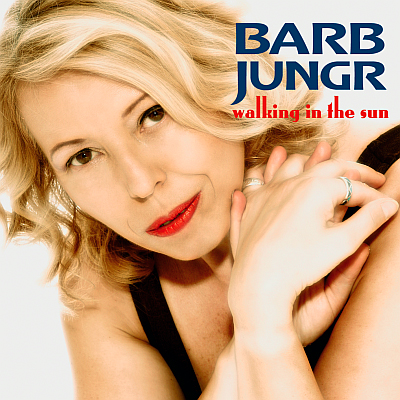
Barb Jungr - Walking In The Sun (2006)

Title: Barb Jungr – Walking In The Sun (2006)
Genre: Jazz
Format: MCH SACD ISO + Hi-Res FLAC

“Walking in the Sun” heralds a new direction for one of Europe’s finest voices. Drawing on influences from a wide range of musical traditions, including gospel and the blues, the album also includes some exciting new self-penned material. Music lovers will appreciate lyrics by Jimmy Reed, Carole King and Randy Newman as well as a new song by Eric Bibb.

Barb Jungr is a very well known singer in her native England, where she’s had a lengthy career of performances and collaborations with numerous artists; most recently, she participated in the “Girl Talk” sessions with Claire Martin and Mari Wilson. She’s also become quite something of a musicologist, with a very keen interest in world music and she’s lectured extensively about singing and vocal performance. Her repertory is quite broad, encompassing diverse styles ranging from French chansons to cabaret, folk, gospel and blues. This superb disc from Linn Records features an eclectic mix of gospel and blues, as well as songs from artists as diverse as Bob Dylan, Randy Newman and Carole King, and includes a couple of self-penned tunes as well. The resulting album has a very spiritual feel to it, and Barb Jungr finds a way to make just about every song in this stunning assortment her own. Barb’s smoky-sweet alto is perfect here; on the disc’s opening track Who Do You Love (popularized by George Thorogood’s raunch-n-roll version) she lends a very light vocal touch (almost a whisper), which theoretically seems totally wrong for this song, but she makes it just oh-so-right. The next track, Bob Dylan’s Trouble In Mind opens with a sensationally smooth upright bass and finger-snapping intro, and segues into Barb’s spot-on vocal – this woman really knows how to sing the blues, and she can really belt it out as required. Jessica Lauren lends a lightly-played organ accompaniment that’s sheer perfection – one thing that’s evident from the start is how the vocal and instrumental textures are so perfectly arranged throughout this excellent disc. There are a few weak spots – I’m not particularly enamoured with Barb’s delivery of the Jimmy Cliff classic Many Rivers To Cross, but then I can’t begin to tell you how many times I’ve hit the replay button on her soulful delivery of Brownie McGhee’s Rainy Day. It’s one of those magical moments where everything worked perfectly, and the resulting sounds are irresistible. The sound quality of this multichannel hybrid SACD is superb. All of my listening was done in the multichannel mode, and the instruments and voices are expertly placed in the recorded soundfield – this is a textbook example of how surround sound should be done right. Highly recommended.
(more…)

3 min read

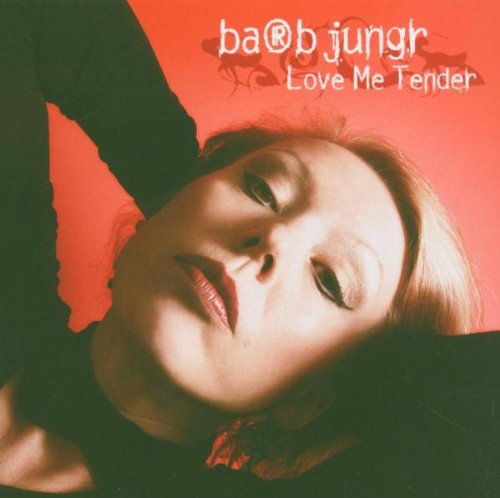
Barb Jungr – Love Me Tender (2005) [SACD / Linn Records – AKD 255]

Barb Jungr - Love Me Tender (2005)

Title: Barb Jungr – Love Me Tender (2005)
Genre: Pop, Jazz
Format: MCH SACD ISO + Hi-Res FLAC

Some of the greatest song writing talents of the fifties, sixties and seventies wrote for the legendary singer Elvis Presley. Barb Jungr, regarded as Britain’s foremost chansonnier and song stylist takes these songs and embarks on a journey through love, loneliness, obsession and finally, faith. ‘Love Me Tender’ is a tribute to Elvis Presley in the real sense of the word. She is not impersonating him. These tracks are real covers – deconstructions and reinterpretations – making the listener forget the original. ‘Love Me Tender’ falls into the dark sound world usually inhabited by Nick Cave and Tom Waits; unforgettable and highly original.

Barb Jungr’s three previous Linn albums have seen her exercise her extraordinary talent for metamorphosing the songs of everyone from Bob Dylan and Jacques Brel to the Everly Brothers and Ray Davies into deeply personal, thought-provoking artistic statements; “Love Me Tender” addresses songs connected with pop music’s ultimate icon: Elvis Presley. Arrangers Adrian York and Jonathan Cooper, given mostly non-musical atmospheric cues to do with Jungr’s perceptions of the Deep South, have produced a remarkably homogeneous soundscape full of tolling bells, doomy repeated chords and aching spaces, transforming songs such as Love Me Tender, Heartbreak Hotel, Are You Lonesome Tonight? and In the Ghetto into poignant meditations on emotional yearning and loss. Jungr’s voice, always affecting courtesy of its ability to move uncontrivedly between the most intimate dramatic whisper, a confiding earnestness tinged with melancholy vibrato, and a strident assertiveness, brings out all her material’s subtlest nuances and the resulting album, which also contains a haunting original, Looking for Elvis, can only bolster Jungr’s already considerable reputation as one of Europe’s most intriguing and intelligent interpreters of the contemporary song.

(more…)

2 min read

Barb Jungr – Every Grain Of Sand (2002) [Reissue 2003] [SACD / Linn Records – AKD230]

Barb Jungr - Every Grain Of Sand (2002) [Reissue 2003]

Title: Barb Jungr – Every Grain Of Sand (2002) [Reissue 2003]
Genre: Rock, Folk
Format: MCH SACD ISO + Hi-Res FLAC

The cult classic album of song-styled material from the Bob Dylan songbook. Barb Jungr’s first album of Bob Dylan songs has deservedly become known as a cult classic and has won her a dedicated fan base around the world. The album even has celebrity fans, with Jeremy Irons naming it as one of the must-have albums on BBC Radio 4’s Desert Island Discs.

Every Grain of Sand is a breathtaking revelation on several fronts. First, Barb Jungr treats Bob Dylan as one of the great tunesmiths of the American popular tradition. Not merely as rock & roll’s preeminent songwriter, the direction from which virtually all others have approached his canon, but as a sophisticated composer the equal of the Gershwins, Irving Berlin, Jerome Kern, or Cole Porter. Jungr dramatically re-reads that canon and she fearlessly reshapes it in the process. To cite the most radical instances, she turns “Things Have Changed” into an Eastern European jig and “Tangled up in Blue” into a jaunty, jazzy western, while “Born in Time” is a marvel full of Baroque voicings. One may quibble – and Dylan fanatics, known to be provincial on occasion, certainly will, perhaps vociferously – with an arrangement here or a lyrical interpretation or subtle shading there without – and here is the magic of the album – in the least invalidating the singer’s choices. Indeed, part of the sublime beauty of Every Grain of Sand is that it inspires, even challenges, one to make personal revisions and reinterpretations. Ultimately, Jungr is one of the few artists who has managed to not only come out on the other side of this songbook unscathed, but to actually come out having enhanced its gravity, significance, and unvarnished beauty as well as her own. She is not merely singing, but telling stories. She opens up a window of vulnerability and sensuality that had previously sat stoic beneath the surface of these songs and suffuses them with such a delicate, gauzy luminosity that they seem to glow from the inside out. Her singing is soulful and emotionally naked, and the performances are so expressive that you take something new away with each listen. The treasures (“I’ll Be Your Baby Tonight,” “Ring Them Bells,” “Not Dark Yet,” “Is Your Love in Vain?,” and “What Good Am I?”) tucked away here are endlessly rewarding. If you think you’ve heard Bob Dylan – or Barb Jungr – before Every Grain of Sand, you are, simply put, mistaken.

(more…)

3 min read

Barb Jungr – Chanson: The Space In Between (2000) [Reissue 2001] [SACD / Linn Records – AKD 167]

Barb Jungr - Chanson: The Space In Between (2000) [Reissue 2001]

Title: Barb Jungr – Chanson: The Space In Between (2000) [Reissue 2001]
Genre: Chanson, Pop
Format: SACD ISO + Hi-Res FLAC

Barb Jungr’s original take on the songs of Jacques Brel marked her Linn debut. Barb Jungr opted to use specially commissioned translations by Des de Moor and Robb Johnson for her English language renditions; the songs losing nothing in their careful translation whilst allowing Barb to fully explore and explain the emotions within the songs. Chanson: The Space In Between saw Barb turn back to her European roots which had previously been overshadowed in performance by American genres such as blues, gospel and jazz.

Timeless as it is, you could have asked, justly, whether or not the new millennium really needed yet another interpretation of the Jacques Brel songbook, so often had it been attempted, both successfully and miserably, in the preceding century. Barb Jungr definitively answered that question on Chanson: The Space in Between, and she answered resoundingly in the affirmative – it is an exhilarating purr of an effort. But then, Jungr, a longstanding anchor of the British alternative cabaret circuit, had already been compared to both Lotte Lenya and Edith Piaf prior to recording this first full-fledged effort in the genre (she had previously performed some of the music live and Bare did include a Brel song amongst its set list), so its accomplishment is no surprise. The album, too, goes well beyond Brel, featuring as it does a repertoire that includes songs by Cole Porter, Jacques Prévert, Léo Ferré, and E.Y. “Yip” Harburg from the old tradition, as well as a tune from the pen of Elvis Costello and a modern chanson from compatriot Robb Johnson. There are several reasons why Chanson is such a splendid realization of Jungr’s vision. For one, the singer specially commissioned translations of the Brel and Ferré pieces from Johnson and fellow cabaret haunter Des de Moor, and they represent the most accurate renderings of these songs into English. Secondly, producer Calum Malcolm, utilizing an extremely sympathetic band, creates rich, poignant backdrops for the songs. You can hear the mythic Paris of yore wafting throughout, particularly in “Sunday Morning St. Denis” and “Cri du Coeur,” while there is an equally strong strain of straight-ahead jazz (“Quartier Latin,” “The Space in Between”). Most important, though, are the ravishing readings given by Jungr. Her performance ranges from the almost desperate and passion-haunted, both in life and love (“La Chanson des Vieux Amants”), to the positively triumphant (“Marieke”) with equal skill, sounding as gorgeously weathered on “I Love Paris” as she seems delightfully guileless and clear-eyed on “New Amsterdam” (with its flawlessly ringing production). This is cabaret in its highest form.

(more…)

3 min read

Barbara Carroll Trio – Sentimental Mood (2006) [Japan 2017] [SACD / Venus Records – VHGD-203]

Barbara Carroll Trio - Sentimental Mood (2006) [Japan 2017]

Title: Barbara Carroll Trio – Sentimental Mood (2006) [Japan 2017]
Genre: Jazz
Format: SACD ISO + Hi-Res FLAC

Barbara Carroll remains at the top of her game at age 80. This wonderful program of standards shows her at her swinging best. If her voice has lost a little of its bloom (she sings, or rather speaks, on a couple of numbers) her fingers certainly have not. Very few jazz pianists get a truly individual sound from the piano, but Carroll’s full, two handed style is unique, and has been for decades. An excellent rhythm section and the usual fine sound from Venus make this a winner. With Jay Leonhart playing bass and Joe Cocuzzo playing drums, the trio performs such classics as “Fly Me To The Moon”, “My Funny Valentine” and “Autumn In New York”.

(more…)

1 min read

Barbara Carroll – I Wished On The Moon (2007) [Japan 2017] [SACD / Venus Records – VHGD-232]

Barbara Carroll - I Wished On The Moon (2007) [Japan 2017]

Title: Barbara Carroll – I Wished On The Moon (2007) [Japan 2017]
Genre: Jazz
Format: SACD ISO + Hi-Res FLAC

Barbara Carroll is an elegant jazz pianist, composer and vocalist, long recognized as one of the premier players of swinging jazz piano and expressive vocals. Her inventive piano playing and totally unique vocal sound leads her into transforming any composition into her own art with her trade-mark emotional directness and respect for the tune, its lyrics and its many possibilities. According to Stephen Holder of the New York Times, “Ms. Carroll plays with an impeccable technique in which harmonies burst into flower. In recent decades she has embraced singing in a parlando style that is witty, literate, discreetly sexy and at times heartbreakingly honest”. All Music’s Eugene Chadbourne writes that Ms. Carroll “did not ignore the pop styles of subsequent decades, yet always managed to keep a strong jazz flavor present in whatever material she performed. If swing was a bay leaf, it would be said that Carroll had a large bush growing right outside her kitchen window. She recorded for many of the best labels in the genre including Verve and Atlantic and continued to be in demand at clubs and cabarets into her nineties, playing a regular gig at Manhattan’s Birdland venue until December 2016”.

(more…)

2 min read

Bangles – Greatest Hits (1990) [Reissue 2000] [SACD / Columbia – CS 46125]

Bangles - Greatest Hits (1990) [Reissue 2000]

Title: Bangles – Greatest Hits (1990) [Reissue 2000]
Genre: Rock
Format: SACD ISO + Hi-Res FLAC

SACD reissue of 1990 ‘Best Of’ compilation for the female pop-rock quartet, pressed onto a gold disc. 14 tracks including, ‘Eternal Flame, ‘Hazy Shade of Winter’, ‘ManicMonday’, ‘If She Knew What She Wants’ and ‘Walking Down Your Street’.

The Bangles’ transformation from Merseybeat and garage-smart guitar band to near-definitive example of buffed-and-polished corporate popsters is one of the great rock mysteries of the ’80s. What was up with that video for “Walk Like an Egyptian,” anyway? Greatest Hits puts it all in perspective, tracing the curve from the post-Beatles group sneer of “Hero Takes a Fall” to the deadly earnest Susanna Hoffs showcase of “Eternal Flame.” Shortly after that ballad hit No. 1, the group split. Now unfairly remembered as little more than space fillers on turn-of-the-decade airwaves, the Bangles here make a good case for their spirit, their own songwriting gifts, and, of course, those voices. Weighing in at 14 tracks, Greatest Hits is a good, basic collection of the Bangles’ biggest singles, containing all the hits, including the previously non-LP “Hazy Shade of Winter,” plus a couple of album tracks and, for the dedicated, a new cover of the Grass Roots’ “Where Were You When I Needed You.” It may be easy to carp about fine album tracks from All Over the Place and Different Light that should have been included, yet this is a fine sampler/introduction that might not necessarily capture the Bangles’ best — in this context, their ties to the Paisley Underground and college rock seem nonexistent — but still finds them as masters of irresistible pop singles.

(more…)

2 min read

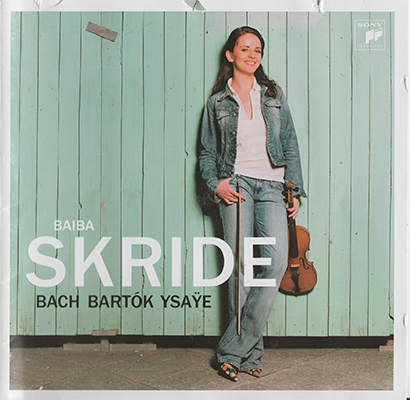
Baiba Skride – Bach, Bartok, Ysaye (2004) [SACD / Sony Classical – SK 92938]

Baiba Skride - Bach, Bartok, Ysaye (2004)

Title: Baiba Skride – Bach, Bartok, Ysaye (2004)
Genre: Classical
Format: SACD ISO + Hi-Res FLAC

The Latvian violinist Baiba Skride won the 2001 Queen Elisabeth competition at the age of twenty. This is her debut recital for Sony, and probably the only SACD of her playing for the indefinite future, as her follow up has only been released on plain CD. She is an interesting complement to Sony’s long term house female violinist, Midori Goto. One wonders whether Skride was signed on to replace Hilary Hahn, who rather unwisely jumped raft to Universal.
It goes without saying that any new violinist who wins a recording contract possesses solid technique. Her tone production high up the stave is refreshing compared to Midori’s rather acerbic, even grating sounds ( most notably on the Sony CD/SACD release of the Mozart Sinfonia Concertante with Imai ), which even high resolution digital can only do so much to mitigate. On the basis of this disc, Skride’s tonal production is unlike fellow Latvian Gidon Kremer, who has a generally more wiry presentation, with greater flexibility in his bowing arm to produce a wider range of tonal shadings. Skride seems to lean more towards the Pinchas Zuckerman palette of rich but somewhat underinflected sound. This disc is one of the most intelligently planned violin selections currently available. All are for unaccompanied violin, the opening Bach partita being the one with the famous Chaconne. Ysaÿe’s set of six solo sontas were published in 1924. The first, which is presented here, was dedicated to Szigeti, whose performances of Bach were renowned. This work’s four movement structure mimics the Bach solo violin sonatas. The Bartók has an opening chaconne, and was commissioned by Menuhin. There is evidence of some sloppiness in Sony’s production values. This disc is claimed to be a ‘Co-production with DeutschlandRadio Berlin’. It is unclear whether this was actually recorded by the radio station for broadcast, and later bought up by Sony, as there is no multichannel layer. Skride is recorded very close to the microphones. This leads in stereo to the violin image being stretched beyond credibility between the speakers. The violin sounds at or in front of the level of the speakers, with little sense of depth. It sounds even closer than the sound RCA accorded Heifetz for his stereo concerto and mono Bach recordings! It is entirely to the fiddler’s credit that there isn’t more harsh grating when the bow hits the string. There is no detail as to the recording, which, based on the edge to the high notes sounds no better than 24bit/48 kHz PCM. Sony have proved laudably immune to Skride’s looks, restraining themselves to only 1.7 photographs of her. This is in marked contrast to the soft core sex romp that the Universal art directors subject their artists to, with the exception of Thomas Quasthoff. In fact, for the back of the booklet, Sony prefers to show a shuttered window rather than her face. Thankfully there is no close-up of her shoes, which appear to have escaped from a Damien Hirst spot painting. There is a colour photo of her 1708 Strad, and very nicely varnished it looks. The Bach partita sounds quite different from Julia Fischer’s complete set. However, in large measure this is due to the different recording styles. Compare the two, and one appreciates the beautiful sound PentaTone commissioned for Fischer, who plays inside a supportive acoustic. Fischer has a slower and more gracious sarabande. Skride has a massive chaconne which is a good half a minute slower than Fischer, who doesn’t exactly zip through it herself. The only slower chaconne than Skride’s I know of is Ida Haendel’s. Fischer’s performance of the entire partita sounds more dance like, whereas Skride is powerful and deliberate, though to her credit the entire performance is impressive in its monumentality rather than turgid. Neither player has any intonation problems, although artistically one can’t say the Chaconne in either of their hands is on the same exalted level as Grumiaux, Menuhin, Heifetz, Szigeti, or Perlman. In large measure the reason is the same for both, where the brief bridging passages which lead from one variation to the next aren’t inflected with the slight but telling changes in tempo or bow strength which lead to the sensation of cumulative musical growth. Skride’s default mechanism for delivering architectural vision is ‘play loud-loud-louder’, which isn’t quite the same concept of continuity. As I don’t know the Ysaÿe work, I’ll refrain from comment, except to say her performance is consistent in style and execution to the Bach, but as there are fewer compositional moments of magic, Skride’s confident and broad brush manner sounds exactly appropriate. The tough and elusive Bartók is the highlight, where the close bordering on oppressive sound adds rather than detracts from the music and performance style. Her timings for the four movements are : 10’16, 4’49, 7’30 and 5’12. These are mentioned because when Menuhin played it for the composer, he revised the estimated performance length to 24 minutes. Nigel Kennedy’s version is even slower than Skride’s. The couple of times I’ve heard this live, both fiddlers from memory appeared to take the piece at a faster clip than Skride. Her performance is full-blooded, monumental rather than folksy or witty the way Menuhin inflected certain passages whilst he still retained the overall sensation of Bachian dignity. The hushed ‘night music’ opening to the final presto doesn’t steal into the consciousness because of the close recording. Nevertheless, an impressive performance which I found more idiomatic than Kennedy’s. Copyright © 2006 Ramesh Nair and SA-CD.net

(more…)

5 min read