John Gardiner & Philarmonia Orchestra – Grainger: The Warriors + Holst: The Planets (1995) [SACD / Deutsche Grammophon – 471 634-2]

John Gardiner & Philarmonia Orchestra - Grainger: The Warriors + Holst: The Planets (1995)

Title: John Gardiner & Philarmonia Orchestra – Grainger: The Warriors + Holst: The Planets (1995)
Genre: Classical
Format: MCH SACD ISO + Hi-Res FLAC

Hyperbole aside, Percy Grainger’s “The Warriors” is quite simply the most inventive, original, brilliant 20th Century orchestral composition you have never heard. Out of the few people who have heard it, half probably blow it off as kitschy fluff. The problem is that Grainger made the music so accessible (or rather so unpretentious), that few listeners realize just how rhythmically and harmonically complex “The Warriors” is. And nearly 100 years later, it’s hard to appreciate how Grainger’s use of percussion instruments was decades ahead of its time, anticipating what Stravinsky, Cage, Adams and others had yet to do. In brief, “The Warriors” is a fantasy for orchestra in a circular ABABA form (much like the last movement of Ive’s 2nd Symphony), consisting of 15 different themes and motives, with an “orgy” or orchestral colors. At first listen, there is nothing ‘modern’ sounding about the music. It has a neo-romantic flavor that perfectly compliments “The Planets.” To fully appreciate “The Warriors,” you really have to listen carefully. Grainger is often compared to Ives for his interest in independent off stage brass, independent polyphony and juxtaposing tonalities and rhymes. A notable feature of “The Warriors” is that it requires two to three conductors. This is because in the section following the return of Tempo I, the entire orchestra divides into three subgroups, each playing at a different tempo. The following section features extensive double-chording where “different instrumental groups simultaneously playing different chord passages that pass through, above and below each other and are harmonically independent of each other.” I had to pull that definition since I cannot better explain it. Remarkably, it’s quite easy to miss all of this where as with Ives you cannot. Finally in Ivesian fashion, after a gigantic fanfare, the piece ends in a sudden anticlimax. What listeners will probably find more interesting than this music theory aspect of the work, is Grainger’s percussion section, which includes xylophone, wooden marimba, glockenspiel, steel marimba (today a vibraphone), staff bells, tubular bells, celesta, and three pianos. Grainger was really the first composer to turn the percussion section into an independent section of the orchestra, making it an equal with strings, brass and winds. The way in which Grainger uses the percussion section to introduce and develop melodic and harmonic ideas was way ahead of its time. While composers in Grainger’s time would follow his lead (Stravinsky, for instance), it’s only recently that composers have begun routinely writing orchestral music that include percussion sections and music for the instruments in the manner of “The Warriors.” Just think of all the extra instruments you see on stage for contemporary compositions compared to almost anything written before 1960. And this percussion section, that resembles a gamelan orchestra, produces sounds that will remind some listeners of John Adams (and others). Also noteworthy is the treatment of the pianos. They are neither an obbligato part nor ‘filler.’ Instead they are treated like any other instrument in the orchestra. Oh, there’s more. In the section following the return of Tempo I, listen for the piano being played by marimba mallets striking the strings. Something, you might say, only John Cage would think of (who was born a year before Grainger began composing “The Warriors”). On top of all of this dribble about harmonics and percussion, “The Warriors” is an exciting, lively piece of music; something we should be regularly hearing as a curtain raiser for gala concerts. And since there is so much going on in the music it, it remains fresh and exciting after dozens of listens. I never just listen to it once, but multiple times. I believe that “The Warriors” has only been recorded a half dozen times, and I know of only three recordings in print: Hickox (Chandos), Rattle (EMI) and this one. Hickox’s recording benefits from a new critical edition of the score — Grainger was always vague about how many percussion instruments and the types of mallets — but his tempos are often too fast, failing to conjure up the grandeur Rattle and Gardiner manage to. Rattle and Gardiner are near identical in interpretation and performance, though I find things in the transition from “Dance Orgy” to “Climax” get a but mushy under Rattle’s baton. The Philharmonia Orchestra, my favorite of London’s half-dozen or so orchestras, is beyond reproach. The recorded sound is terrific. I’ve owned the CD version of this recording for many years, only recently upgrading to the SACD due to the disc becoming mysteriously scratched. When comparing the SACD to CD, it becomes clear how DG manipulated the CD to make it sound good on low end systems. The re-mix engineer has eliminated the fake reverb, which I actually thought worked to the music’s advantage (perhaps the surround mix is significantly more reverberant). More importantly, though, is that when compared to the CD, it becomes clear that the CD spotlighted the brass and percussion, giving them an upfront perspective. This has been undone, creating a much more natural sense of depth and position of the instruments. Finally, the SACD also illuminates some compression done to the CD so that listeners wouldn’t have to adjust the volume much. The unaltered SACD stereo layer reveals that DG did an excellent job recording the Philharmonia, perfectly capturing the huge dynamic range of the music. As for “The Planets,” I’ve never been a fan of it, but I suppose it receives a first rate performance, but I don’t expect it to displace any personal favorites. Enthusiastically Recommended.

(more…)

6 min read

Galina Gorchakova, Philharmonia Of Russia, Constantine Orbelian – Italian Opera Arias (2001) [SACD / Delos – DS 3286]

Galina Gorchakova, Philharmonia Of Russia, Constantine Orbelian - Italian Opera Arias (2001)

Title: Galina Gorchakova, Philharmonia Of Russia, Constantine Orbelian – Italian Opera Arias (2001)
Genre: Classical
Format: MCH SACD ISO + Hi-Res FLAC

Galina Gorchakova, endowed with what London’s Sunday Times called “one of the most important dramatic voices in the post-war era,” makes her debut on Delos with Italian Opera Arias, a collection of her signature roles that have earned her critical acclaim and an immense public following the world over. Gorchakova is accompanied by Constantine Orbelian and the Philharmonia of Russia, the Maestro’s own assemblage of Russia’s leading orchestral musicians resulting in la creme de la creme of Russian ensembles.

On Italian Opera Arias, Gorchakova turns to the verismo style which benefits handsomely from her brand of full-bodied vocalism. Represented on this disc are roles that have always been an integral and vital part of her repertoire such as Butterfly, Santuzza and Aida, as well as such dramatic and tragic heroines as Liu, Leonora, Tosca and Manon Lescaut, which have earned her plaudits world-wide. Further, she juxtaposes the two females of La Boheme -the emotional Mimi and the flirtatious Musetta -as well as the twins of “Cav-Pag” -a smoldering Santuzza with the carefree Nedda. Gorchakova burst on to the international scene 10 years ago with her thrilling portrayal as Renata in Prokofiev’s Fiery Angel at the BBC Proms. She has since triumphed at Covent Garden, the Bastille, Bavarian State Opera, Cologne Opera, Teatro Comunale Florence, Houston Grand Opera, the Kirov, Vienna State Opera, the Metropolitan Opera and La Scala. More recently she scored a major success opposite Placida Domingo in Los Angeles Opera’s new production of Queen of Spades, which the Los Angeles Times called “a rare chance to bask in genuine Russian singing. Galina Gorchakova …was a powerful, luminous Lisa.” Constantine Orbelian is, according to Opera News magazine “a singer’s dream collaborator.” His ambitious series of recordings for Delos includes partnerships with leading international opera stars such as baritone Dmitri Hvorostovsky and contralto Ewa Podles’, and notable emerging artists such as soprano Olga Guryakova and mezzo-soprano Marina Domashenko. Italian Opera Arias was recorded in the Great Hall of the Moscow Conservatory using Sony’s leading DSD (Direct Stream Digital) technology. The recording is available in SACD Super Audio, Multi-Channel…

(more…)

2 min read

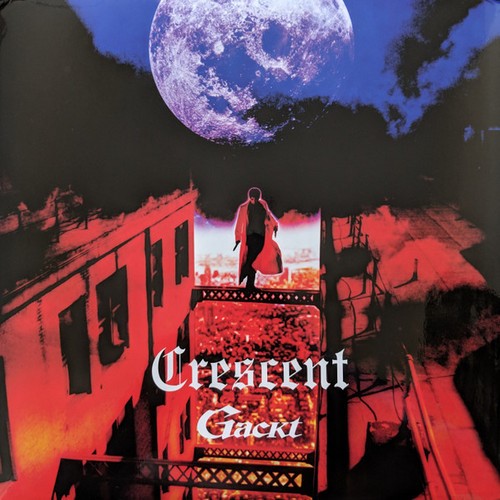
Gackt – Crescent (2006) [SACD / Nippon Crown – CRGP-40004]

Gackt - Crescent (2006)

Title: Gackt – Crescent (2006)
Genre: Rock, Pop, J-Pop
Format: DSF DSD64

Crescent is the fourth full-length studio album released by Japanese solo artist Gackt on December 3, 2003. It is a concept album linked to its predecessor Moon and comes with booklets for both records (Moon did not originally contain one). Crescent also features a duet with L’Arc-en-Ciel vocalist Hyde for “Orenji no Taiyou” with whom Gackt co-starred in the 2003 movie Moon Child.

(more…)

1 min read

Academy Of St. Martin In The Fields, Gabriel Yared – The English Patient: Original Soundtrack Recording (1996) [Reissue 2003] [SACD / Fantasy – FCD-16001SACD]

Academy Of St. Martin In The Fields, Gabriel Yared - The English Patient: Original Soundtrack Recording (1996) [Reissue 2003]

Title: Academy Of St. Martin In The Fields, Gabriel Yared – The English Patient: Original Soundtrack Recording (1996) [Reissue 2003]
Genre: Soundtrack
Format: MCH SACD ISO + Hi-Res FLAC

Gabriel Yared composed most of the music for the soundtrack of one of 1996’s most acclaimed dramas, which was largely performed by the Academy of St. Martin in the Fields; John Constable (on solo piano) and Marta Sebestyen (vocals) are also featured. Yared’s score is mostly typical wide-screen epic stuff–nothing special. More interesting are Hungarian folk singer Sebestyen’s occasional contributions. A few period pop/jazz cuts by Benny Goodman, Ella Fitzgerald, and Fred Astaire are interspersed throughout, and are most likely more effective on screen than on disc, where they juxtapose uncomfortably with the orchestral instrumental pieces.

(more…)

1 min read

Gabriel Castagna, Württembergische Philharmonie Reutlingen – Astor Piazzolla: Orchestral Works (2000) [Reissue 2003] [SACD / Chandos – CHSA 5006]

Gabriel Castagna, Württembergische Philharmonie Reutlingen - Astor Piazzolla: Orchestral Works (2000) [Reissue 2003]

Title: Gabriel Castagna, Württembergische Philharmonie Reutlingen – Astor Piazzolla: Orchestral Works (2000) [Reissue 2003]
Genre: Classical
Format: MCH SACD ISO + Hi-Res FLAC

Astor Piazzolla become hugely popular thanks to his ‘tango nuevo’ band and his short tango pieces. This disc shows his other, more serious side in some of his symphonic music, still mostly inspired by tango rhythms and catchy tunes. It is a great joy to have this music so well recorded and performed, and if you like Piazzolla’s music, you should definitely check this one out.

Piazzolla wanted to be a ‘serious’ classical composer and ready to throw away his Argentinian musical heritage, but under the influence of Nadia Boulanger he used his tangos to create some truly original and engaging symphonic music. The best example for that is the first piece, Tangazo, which meanders between Bartok, Stravinsky, Shostakovich and many others till it turns all powers of full symphony orchestra into a truly magnificent tango-like theme. The rest is just as brilliant. Three symphonic tangos are more like what we would expect from this composer, in a regular exchange between the orchestra and solo groups. “Milonga del Angel” is probably my favourite of all Piazzolla’s tangos, and even if it looses some of it’s edge in a full orchestral version, it gains some other aspects, it sounds HUGE and even more sensual. Last piece, sinfonietta, is the earliest composed piece on here, from 1953, written before Boulanger’s advice. Piazzolla is exiting as ever, the music swings wildly around solo clarinet jazzy tune, with dance rhythms always present. The slow movement is a sombre grieving tune, owing much of its musical language to Bartok’s “Music for strings, percussions and celesta”. The finale is still in Bartok’s domain, but with ever present rhythmic twists and turns and unusual colours. It is definitely the piece you wouldn’t expect from a tango master. Recording is (like all other Chandos SACDs) fantastic, orchestra’s sound is solid and detailed, stage huge (in surround), solo passages focused and clear, dynamic range natural. As I said, if you like Piazzolla and feel like exploring more, go for it. This disc is a perfect accompaniment to his chamber-tango discography.

(more…)

2 min read

Gotan Project – La Revancha Del Tango (2001) [Reissue 2004] [SACD / Barclay – 981 878-7]

Gotan Project - La Revancha Del Tango (2001) [Reissue 2004]

Title: Gotan Project – La Revancha Del Tango (2001) [Reissue 2004]
Genre: Electronic, Latin, Tango
Format: MCH SACD ISO + Hi-Res FLAC

An unrivaled collection of themes representing a unique fusion amid traditional forms of music and the nouvelle fields of electronica, Gotan Project’s La Revancha del Tango discloses unknown frontiers for the modern beat explorers. Inspired by Argentinean tango, Philippe Cohen Solal and Christophe H. Müller, responsible for projects such as Boys From Brazil or Stereo Action Unlimited, united their efforts with Eduardo Makaroff to record what ultimately became a daring musical piece. Mixing styles like dub and downbeat and enrolling the talents of Argentinean musicians like Gustavo Beytelmann and Nini Flores, the founding trio of Gotan Project managed to deliver a unique debut album. “Tríptico,” “Santa Maria (Del Buen Aire),” and “El Capitalismo Foraneo” are just of the three themes revealing the trio’s composing intuition, manipulating the romanticism and dark inspiration of Argentinean illustrative street music with novel electronica. Operating with instruments like the bandoneon, along with modern percussion, Gotan implements an exclusive creative challenge. “Vuelvo Ar Sur,” an Astor Piazzolla original composition vocalized by Cristina Villalonga, closes this unequaled set of melodies, confirming Gotan’s sole extent of melody exploration.

(more…)

2 min read

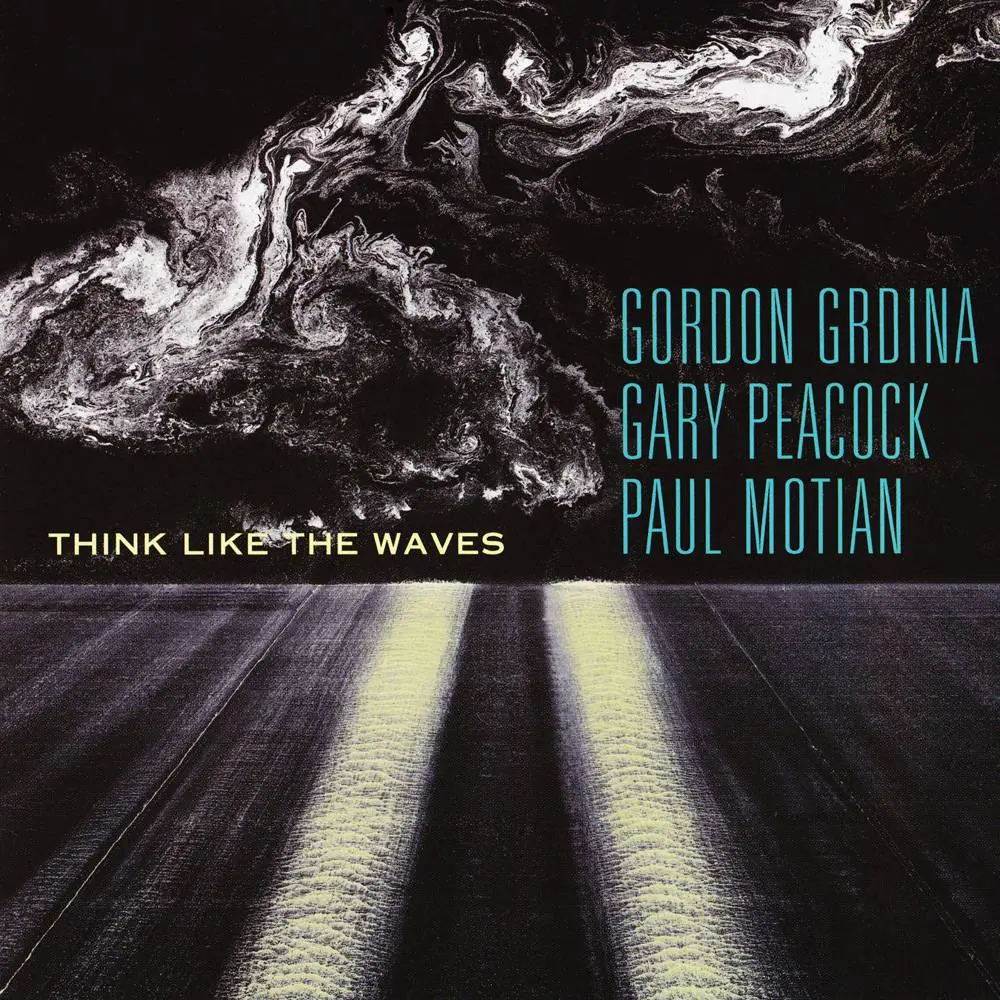
Gordon Grdina, Gary Peacock, Paul Motian – Think Like The Waves (2006) [SACD / Songlines Recordings – SGL SA1559-2]

Gordon Grdina, Gary Peacock, Paul Motian - Think Like The Waves (2006)

Title: Gordon Grdina, Gary Peacock, Paul Motian – Think Like The Waves (2006)
Genre: Jazz
Format: MCH SACD ISO + DSF DSD64 + Hi-Res FLAC

The young, Vancouver guitarist and oud player Gordon Grdina sought out Gary Peacock after a Keith Jarrett concert in San Francisco in 2000, and for the next five years Gary became his mentor and teacher. At their last meeting at Gary’s house in upstate New York there was virtually no discussion, they just sessioned together for an hour or so, and the next day Gordon asked Gary if he would do a trio record. Gary agreed, and helped bring Paul Motian (another of Gordon’s musical heroes) into the picture. Recorded in Brooklyn in January, Think Like the Waves is a remarkable international jazz debut, full of compelling original tunes by Grdina and deep interaction by the trio.

It’s not every jazz musician who doubles on guitar and oud (the centuries-old Middle Eastern forerunner of the mandolin), but Gordon Grdina makes the combination work. He brought 14 difficult originals to the studio for a recording session with veterans Gary Peacock and Paul Motian, drawing on his interest in blending elements of Arabic music and various jazz genres. When Grdina is playing oud, the songs often seem like they evolved spontaneously in the studio, especially the meandering “Platform” and the dark “Renunciation.” On guitar, Grdina’s gift for spaciousness and lyricism in the longing “Distant” sounds reminiscent of Jim Hall. The brooding “Cobble Hill” is another striking performance. While Peacock and Motian had their work cut out for them engaging this music, they provide terrific interaction with Gordon Grdina throughout the sessions.

(more…)

2 min read

Golden Earring – Naked III: Live At The Panama (2005) [SACD / Universal – 987 021-9]

Golden Earring - Naked III: Live At The Panama (2005)

Title: Golden Earring – Naked III: Live At The Panama (2005)
Genre: Classical
Format: MCH SACD ISO + DSF DSD64 + Hi-Res FLAC

Best known in the U.S. for their hard rock material, Golden Earring have been the most popular homegrown band in the Netherlands since the mid-’60s, when they were primarily a pop group.

(more…)

1 min read

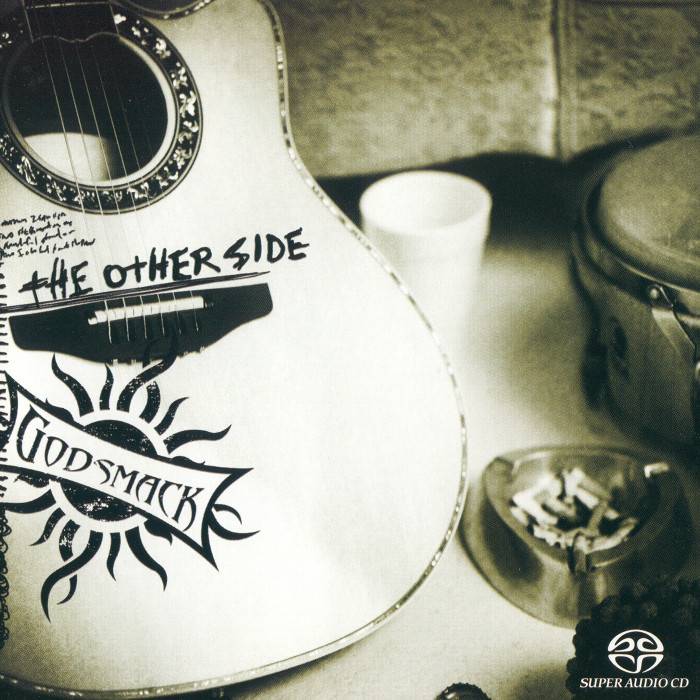
Godsmack – The Other Side (2004) [SACD / Universal Records – B0002401-36]

Godsmack - The Other Side (2004)

Title: Godsmack – The Other Side (2004)
Genre: Rock
Format: MCH SACD ISO + DSF DSD64 + Hi-Res FLAC

The Other Side is an acoustic EP by the American rock band Godsmack. It includes several previously released songs re-recorded as acoustic versions, as well as three new acoustic tracks. The Other Side was recorded in a Hawaiian studio with producer David Bottrill, who worked with the band early. This album has been certified Gold by the RIAA.

The Other Side is Godsmack’s first acoustic offering. Totaling seven songs, it’s not quite a full album. But fans will note its mixture old and new material, as well as the departure from Sully Erna and co.’s normal metallurgical sonic signature. The primary influence here is Alice in Chains. New track “Running Blind” is dominated by the high-low harmony sound that’s become Alice in Chains’ legacy, as is “Re-Align,” which otherwise doesn’t drift very far from Faceless’ electrified version. The guitars – and guitar solos – are acoustic throughout Other Side, and the percussion is lighter and more refined than the normal ‘Smack pummel. As for the rest of the new material, “Voices” suggests the more subdued work of the band’s peers (Seether, Staind, etc.), while “Touché” crosses threads of the Allman Brothers with the usual post-grunge throttle. It’s also a little free advertising for Erna’s vanity imprint and its new signing, Dropbox, whose Lee Richards and John Kosco guest. In a way, The Other Side feels like a vanity project for Godsmack itself, the sort of thing a band releases in between official studio records, or just because it can. But that doesn’t mean it’s a bad trip for fans, who will no doubt get a kick out of this more jangly side of a band that’s made a tidy career out of going for the jugular.

(more…)

2 min read