Hiromi – Hiromi’s Sonicbloom: Time Control (2007) [SACD / Telarc Surround – SACD-63655]
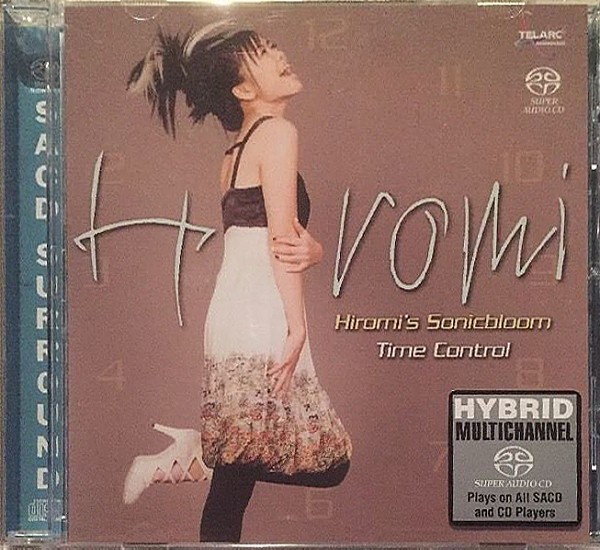
Hiromi - Hiromi's Sonicbloom: Time Control (2007)

Title: Hiromi – Hiromi’s Sonicbloom: Time Control (2007)
Genre: Fusion, Jazz Rock
Format: MCH SACD ISO + DSF DSD64 + Hi-Res FLAC

Time Control is a studio album by Hiromi Uehara’s group, Hiromi’s Sonicbloom. It’s a concept album centered on the idea of time. In addition to Hiromi’s original trio, the album features guitarist David “Fuze” Fiuczynski whose technique and tonal approach gives the album its characteristic sound. C. Mishael Blayly of All About Jazz wrote “On Time Control, the pianist largely restricts herself to the acoustic piano, giving the recording a firmly grounded tradition while her approach to the 88, coupled with Fiuczynski’s guitar playing, hurl the music into hyperspace. The pianist’s classical training is readily evident… Her chordal modulation is breathtaking in its virtuosity”.

Hiromi Uehara’s version of jazz is unique without being willfully strange – clearly deeply rooted in the straight-ahead jazz verities, she nevertheless writes with a distinctly postmodern sensibility, gleefully juxtaposing wildly disparate musical elements and infusing everything with a joyful energy. In fact, joyful energy is probably the most significant hallmark of her music; on her latest album, even her attempt at a ballad eventually winds up in swinging uptempo territory, and just about everything else either rushes headlong or rocks out strongly in midtempo. This is actually something of a concept album centered on the idea of time, the control of time, and the effects of time on humans. It opens with the frantic but lovely “Time Difference,” on which guest guitarist David “Fuze” Fiuczynski is given ample room to rock out, and then lapses into the slower, funkier, but no less energetic “Time Out” (an Uehara original, not the Dave Brubeck standard). “Time Travel” starts out strong but runs out of gas about halfway through its eight and a half minute length, but “Real Clock vs. Body Clock = Jet Lag” is a real hoot – a surf-rock theme that alternates with a barrelhouse barroom piano theme and then becomes an exercise in advanced guitar and synthesizer tonal insanity. One of the most interesting things about this album is the way that Fiuczynski’s tonal experimentation draws out a similar adventurousness in Uehara, to the extent that it’s sometimes hard to tell which of them is playing a solo. Several tracks on this album are several minutes too long, but overall it’s a real treat. You’ll be tired at the end, but it will be a good tired.

(more…)

3 min read

Hiromi – Hiromi’s Sonicbloom: Beyond Standard (2008) [SACD / Telarc Surround – SACD-63686]

Hiromi - Hiromi’s Sonicbloom: Beyond Standard (2008)

Title: Hiromi – Hiromi’s Sonicbloom: Beyond Standard (2008)
Genre: Fusion, Jazz Rock
Format: MCH SACD ISO + DSF DSD64 + Hi-Res FLAC

Beyond Standard is an album by Hiromi Uehara’s group, Hiromi’s Sonicbloom. Contrasted with her previous albums that featured mostly original compositions, this one is a collection of Jazz standards played in a fusion style. Chris Jones of BBC stated “With her usual trio now bumped up by the presence of guitarist David Fiuczynski (in their ‘Sonicbloom’ format), Hiromi Uehara continues the work of her previous album, Time Control, but this time it’s cover versions all the way. The precocious pianist is undeniably, stunningly talented and though her brand of flash ivory tickling is jaw-dropping to behold it’s often a little hard to process in digital form”.

After four Telarc albums dedicated to original material, keyboardist Hiromi Uehara and her talented Sonicbloom trio tackle that most treasured of jazz traditions, the standard. Only 27 when this was recorded in 2008, her song choices and execution are less orthodox than other jazz artists’, hence the album’s intriguing title. The pops and clicks of an old vinyl record intro the proceedings, which officially kick off with a smooth rendition of Oscar Hammerstein’s “Softly As in a Morning Sunrise.” While it’s not unrecognizable from the original, bassist Tony Grey quickly steers into a solo that shifts the approach to improvisation and fusion-tinged waters, followed by Hiromi and guitarist David Fiuczynski trading licks. Ultimately the melody becomes obscured by the magnificent playing, as is typical of the jazz approach to interpretations. Debussy’s “Clair de Lune” is handled in a more traditional swinging style that soon shifts into slightly experimental territory with a hyperactive take on the Duke Ellington chestnut “Caravan.” Again Fiuczynski’s nimble guitar commands attention, twisting notes, playing with time and driving the arrangement, with Hiromi’s acoustic piano coming in later as the nearly nine-minute performance winds through its changes. Hiromi’s flying fingers and percussive attack are matched by Martin Valihora’s lively drum work. Some song choices are more unusual, with a funky “Sukiyaki” (listed by its original Japanese title “Ue Wo Muite Aruko”), Hiromi covering herself on “XYG” (the original “XYZ” substitutes “G” for added guitar) and Jeff Beck’s “Led Boots,” where Hiromi pulls out the synths and electric piano and plunges into full bore electrified fusion. She pays tribute to John Coltrane with “My Favorite Things” as she and the band slide and sidestep around the chorus and chords. She closes the hour-long disc with a solo “I’ve Got Rhythm,” which features her hyperventilating speedy runs. It’s a classy, impressive set that displays Hiromi’s obvious talents on keyboards, but also her commendable ability to integrate solos into the band format without losing the thread of the original song’s structure. Co-billing her talented Sonicbloom musicians is well earned, since they are nearly as much a part of this album’s success as its star.

(more…)

3 min read

Hiromi Uehara – Brain (2004) [SACD / Telarc Surround – SACD-63600]

Hiromi Uehara - Brain (2004)

Title: Hiromi Uehara – Brain (2004)
Genre: Jazz
Format: MCH SACD ISO + DSF DSD64 + Hi-Res FLAC

Hiromi Uehara (上原ひろみ), known as Hiromi, is a jazz composer and pianist born in Hamamatsu, Japan. She is known for her virtuosic technique, energetic live performances and blend of musical genres such as post-bop, progressive rock, classical and fusion in her compositions.

Japanese pianist and composer Hiromi Uehara dazzled the jazz world with her 2003 debut, Another Mind. Its mash of keyboard pyrotechnics and range of compositional styles was multiplied exponentially by her irrepressible energy. On that set she used variously sized ensembles to articulate her compositions. On Brain, Hiromi strips it back to a trio and offers a more intimate look at her wide musical universe, utilizing drummer Martin Valihora, bassist Tony Grey (both fellow Berklee College of Music alums), and alternately bassist Anthony Jackson. The album opens with the wacky “Kung-Fu World Champion” with its mélange of sequenced keyboards. It’s a fusion tune to be sure, but it’s so kooky and funky that it transcends the label despite its reliance on staggering time signatures and stop-on-air turnarounds and changes. It’s a careening tour de force where electronic keyboards and pianos are layered over a scattershot rhythm that pulls and pushes the deep pocket funk and strafes it with a post-bop sensibility. Grey’s bassing here is so choice, so utterly fluid and physical. But it’s back to jazz on “If…” with Jackson taking the bass chair. It’s a strolling soul-jazz figure, bubbling over a series of chromatically arranged ostinati. Its beauty is crystalline despite all the activity. “Wind Song” is a mid-tempo ballad with beautiful ringing lines in the middle register. Its repetitive figure shifts and shapes an alternate melodic line in the solo. The knottiness of the title track offers a close, scrutinizing view of Hiromi’s mad muse; using her piano to articulate a figure she creates a warped and angular counterpoint with electronic keyboards keeping the rhythm section striating in between, with precise interstitial motifs before the entire cut gives way to a blessed out of minor key prelude on the piano and her rhythm section dancing around the changes in hushed tones. The centerpiece of the set is a stunningly beautiful tune called “Green Tea Farm.” A solo piece, it is pastoral. In sum, Hiromi has built upon her previous effort by stripping down her band and showcasing the less physical but no less ambitious side of her improvisational and compositional flair. Her sound might still be confounding to the purists, but who cares? Hiromi is a jazz pianist for the new century, one whose “yes” to the wealth of musical styles that are available to her is only eclipsed by her ability to work them into a unique whole that bears her signature.

(more…)

3 min read

Hino-Kikuchi Duo – Edges (2007) [Japan only Release] [SACD / Sony Records Int’l – SICP 10096]

Hino-Kikuchi Duo - Edges (2007) [Japan only Release]

Title: Hino-Kikuchi Duo – Edges (2007) [Japan only Release]
Genre: Jazz
Format: SACD ISO + Hi-Res FLAC

Collaboration album of two Japanese Jazz musicians – trumpeter Terumasa Hino and pianist Masabumi Kikuchi. The album received the Silver Award of the Japan Jazz Disc Awards.

Hino Terumasa and Kikuchi Masaaki, comrades and allies who have relentlessly pursued the cutting edge and the very essence of music. Their two souls resonated fatefully, and in 2007, they forged yet another legend. This work, forming a counterpart to the quintet album “Counter Current” which challenged the world as ultra-hardcore authentic jazz, flows with the crystalline time of two musicians confronting each other with the tension of a serious contest, exchanging an unspoken dialogue. It is art pushed to its limits, where the “edge” forged by years of clandestine struggle towards supreme music is brought into sharp relief. The world of beauty, polished by the tireless refinement of these seekers, deeply and quietly heals the soul. In addition to newly written original compositions, the album also includes Hino’s breakthrough work ‘Alone, Alone and Alone’ and the standard ‘I Fall in Love Too Easily’. Each solo can also be enjoyed.

(more…)

2 min read

Hilmar Jensson – Ditty Blei (2004) [SACD / Songlines Recordings – SGL SA1547-2]

Hilmar Jensson - Ditty Blei (2004)

Title: Hilmar Jensson – Ditty Blei (2004)
Genre: Jazz
Format: MCH SACD ISO + DSF DSD64 + Hi-Res FLAC

On Ditty Blei, Icelandic guitarist Hilmar Jensson and an acoustic quintet perform his challenging compositions, imbuing them with a rhythmic flair and melodic and harmonic interest that balances offbeat grooves and improvisational freedom, rock extraversion and jazz discipline. Intricate counterpoint from the horns, abrasive guitar solos, constantly shifting metres and time-bending percussive commentary complete the picture. Stark yet tender emotional underpinning engages the listener as Jensson lays out his vision of jazz present and jazz future. The second recording for Songlines by the guitarist of Jim Black’s Alasnoaxis is very different from the improv/ambient/collage approach of Tyft – even though its trio of Jensson, Black and Andrew D’Angelo is back. Here an acoustic quintet runs with Jensson’s challenging compositions, giving them a rhythmic flair and melodic/harmonic interest that might recall Chris Speed’s Yeah No in its balance between offbeat grooves and improvisational freedom, rock extraversion and jazz discipline. Intricate counterpoint from the horns, abrasive guitar solos, constantly shifting metres, and Black’s time-bending percussive commentary complete the picture. With a stark but tender emotional underpinning that engages the listener, Jensson lays out his vision of jazz present and jazz future, even if he questions whether jazz is a useful descriptor for his music: “Ever since the early ’90s I’ve had a close relationship with the music and musicians of the “downtown” scene. There are many exciting things happening in Iceland but this is the core of my musical self. New York is where this style was born and where the strongest players are so it’s natural for me to turn there when I need to realize my ideas. The fact that many of these musicians are my close friends makes the choice even more natural. The term “jazz” though doesn’t mean anything to me anymore. It’s way too broad to define and that’s good. I think that many different genres of music are melting into one indefinable style with plenty of room for variation and no need to be anything except good and interesting.

Hilmar Jensson might be a jazz guitarist, but he’s not necessarily one of jazz’s nice guys. His textures, harmonic choices, and rhythms often steer closer to experimental rock and even post-grunge than mainstream post-bop, and you can forget about gauzy chord washes or flirtations with widescreen Americana (isn’t it about time to make Icelandia a musical style?). So for those seeking unpredictability in their jazz (and who also prefer music that keeps them awake), here’s your man. Ditty Blei is Jensson’s second Songlines release, following 2003’s crazily diverse Tyft. This new recording sounds “jazzier” than Tyft, due in large degree to the expanded lineup that adds trumpeter Herb Robertson and bassist Trevor Dunn to the core trio of Jensson on guitar, Jim Black on drums, and Andrew D’Angelo on alto sax and bass clarinet. But the lineup is only one element that tilts Ditty Blei further toward jazz. A greater sense of flow also permeates the recording; Jensson has penned music with a seamless feel regardless of its startling contrasts. And there is a bright melodicism present in memorable themes the band almost seems to stumble upon by accident (the opening “Letta”), although even then little dissonances from a broken guitar phrase or ragged horn blurt can often be heard flitting around the edges. If there’s an element to be singled out as one of the least jazzy aspects of Ditty Blei, it might be Jensson’s skewed sense of rhythm, brought to life by Dunn and the incomparable Black. At least on the evidence so far, Jensson would appear to have a severe allergy to swinging tempos; while forward momentum is important, keeping the listener off-center is a guiding principle. Start tapping your foot and you never lose the sense of pulse, but given all the odd meters you’re also in and out of sync with the band from measure to measure. Few groups could navigate this knotty stuff so gracefully. Jensson has also penned material that takes full advantage of this quintet configuration and the highly idiosyncratic styles of the individual musicians – which means there are plenty of opportunities for Robertson and D’Angelo to cut loose with their deliriously over-the-top approaches to vocalizing through their horns (“Grinning,” “Gobbles”). Unlike some of the more relentless free jazz exercises, however, Jensson knows these top-shelf improvisers have a deep capacity for lyricism, so he provides them with opportunities to display that talent as well, as on the folkish “Correct Me if I’m Right” and the understated conclusion of “Grinning.” These tracks feature some of the leader’s finest work on acoustic guitar, proving that he can be a nice guy if he puts his mind to it.

(more…)

5 min read

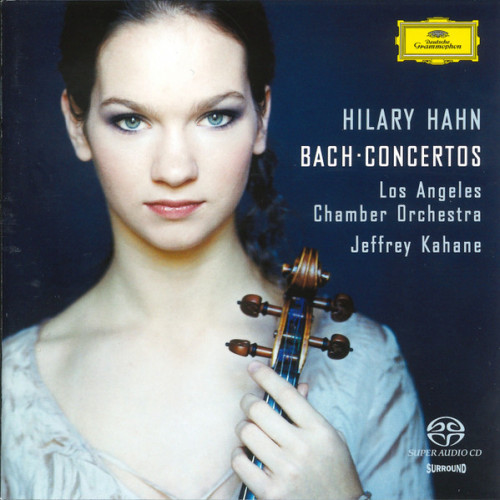
Hilary Hahn – Bach Concertos (2003) [SACD / Deutsche Grammophon – 474 6392]

Hilary Hahn - Bach Concertos (2003)

Title: Hilary Hahn – Bach Concertos (2003)
Genre: Classical
Format: MCH SACD ISO

Hilary Hahn is not regarded as an early music star, by any means, but her recordings of J.S. Bach’s violin concertos with Jeffrey Kahane and the Los Angeles Chamber Orchestra are somewhat in the spirit of historically informed performances, and listeners who might have expected more mainstream interpretations may be pleasantly surprised. Some of the expected characteristics of Baroque period practice are here, such as fleet tempos, a small ensemble, bright sonorities, light textures, and an active harpsichord and cello continuo, and the versatility of Kahane and his group goes far to create this period quality. Hahn might have indulged in some free ornamentation and even added some improvised cadenzas, but her straightforward playing is at least clean and unaffected, and she deserves credit for her brilliant technique, which carries these pieces. While her approach to Bach isn’t close to Rachel Podger’s playing in authentic Baroque style, neither does it approximate the richer, heavier, “old school” style of Yehudi Menuhin, so Hahn may appeal to some listeners as a compromise between competing schools of thought. Deutsche Grammophon’s recording puts Hahn in a prominent, central position, so it’s easy to stay focused on her solo part in the big sound of this hybrid SACD. –AllMusic Review by Blair Sanderson

Hilary Hahn’s first recording for DG confirms her growing reputation as one of the finest violinists of our time, irrespective of age. This is Bach playing of truly extraordinary quality, from the Los Angeles Chamber Orchestra as much as the soloist(s). Conductor Jeffrey Kahane and Hahn together bring an absolutely toe-tapping abandon to the outer movements of the E major concerto, and the central Adagio emerges as a major slow movement, pure poetry with the continuo harpsichord thankfully not too prominent but perfectly placed to add a touch of definition to the bass lines. Perhaps what makes this collection so remarkable from the solo point of view is the fact that Hahn doesn’t take the spotlight, front and center, but gives the music the chamber-like interplay and “concerto grosso” feel that produces a more “authentic” impression than many performances using period instruments. It goes without saying that her own contribution is extremely well executed, perfect in intonation, and she controls her vibrato in the slow movements in a way that never makes the music sound mushy or overly sentimental–but she remains very much “first among equals”. In the double concerto, she and Margaret Batjer match their tones with uncanny accuracy, and Hahn’s interplay with oboist Allan Vogel in the C minor double concerto is a model of what a gracious musical dialog should be. In short, you won’t find these works better played by anyone, or given more pleasingly listenable interpretations. My only quibble concerns DG’s sonics, which turn a touch hard in the violin’s upper register and only reluctantly permit a true piano in quieter passages, though given the extrovert nature of the playing there aren’t all that many of those. Otherwise, the recording is excellently balanced and clear, and this is in all respects an extremely auspicious debut recording for Hahn on her new label. –David Hurwitz, Classics Today

(more…)

3 min read

Hideto Kanai Quintet – Concierto De Aranjuez (1978) [Japan 2006] [SACD / Three Blind Mice – MHCP 10034]

Hideto Kanai Quintet - Concierto De Aranjuez (1978) [Japan 2006]

Title: Hideto Kanai Quintet – Concierto De Aranjuez (1978) [Japan 2006]
Genre: Jazz
Format: SACD ISO + Hi-Res FLAC

Bassist Hideto Kanai has been leading the progressive jazz scene in Japan since the 1960s (see Masayuki Takayanagi’s Ginparis Session), and this 1978 recording is considered as one of his major achievements. Kanai’s regular group, consisting of three young Japanese musicians and an American expat drummer Michael Reznikoff, recorded four long numbers – ranging from six to 13 minutes each – within just six hours. “Mr. Gabe” and “Silk Road” are original compositions by Kanai. The searching and experimental quality of their performance clearly shows that they have gone through the free jazz movement, but it is not totally atonal nor without structure.

(more…)

1 min read

Hideto Kanai Group – Q (1971) [Japan 2007] [SACD / Three Blind Mice – MHCP 10045]

Hideto Kanai Group - Q (1971) [Japan 2007]

Title: Hideto Kanai Group – Q (1971) [Japan 2007]
Genre: Jazz
Format: SACD ISO + Hi-Res FLAC

The sixth album released by Three Blind Mice turned the spotlight on Hideto Kanai a veteran bassist who had been pursuing a very progressive, unique and uncompromising kind of jazz since the early 1960s. With his passion for educating young musicians and adventurous nature, Kanai has drawn some comparisons to another great leader, Charles Mingus, whom he respected.

The four performances in this album are all free-oriented and may be challenging for some listeners, but they riveting, fascinating, and ultimately satisfying. The opening and closing numbers were actually quite “composed.” In an interesting collaboration with contemporary composers (from the world of classical music), Shuko Mizuno wrote “April” and Hiroshi Nanatsuya wrote “Meditation” specially for this group.

(more…)

1 min read

Hidehiko Matsumoto Quartet – Sleepy (1976) [Japan 2006] [SACD / Three Blind Mice – MHCP 10032]

Hidehiko Matsumoto Quartet - Sleepy (1976) [Japan 2006]

Title: Hidehiko Matsumoto Quartet – Sleepy (1976) [Japan 2006]
Genre: Jazz
Format: SACD ISO + Hi-Res FLAC

Hidehiko “Sleepy” Matsumoto was one of the best jazz sax players in Japan. His nickname was given by an American soldier when he was playing in a US military camp after the war. A true giant on tenor and flute, his contributions to the jazz industry of Japan were many and recognized by many awards and honors. This record, made in 1976 in a one-horn quartet setting, showcases Matsumoto’s brilliant playing on both tenor saxophone and flute. He is a true master of both instruments and it is a great pleasure to hear him beautifully recorded by the people of Three Blind Mice label. A masterpiece, with great sound.

(more…)

1 min read