Gotan Project – La Revancha Del Tango (2001) [Reissue 2004] [SACD / Barclay – 981 878-7]

Gotan Project - La Revancha Del Tango (2001) [Reissue 2004]

Title: Gotan Project – La Revancha Del Tango (2001) [Reissue 2004]
Genre: Electronic, Latin, Tango
Format: MCH SACD ISO + Hi-Res FLAC

An unrivaled collection of themes representing a unique fusion amid traditional forms of music and the nouvelle fields of electronica, Gotan Project’s La Revancha del Tango discloses unknown frontiers for the modern beat explorers. Inspired by Argentinean tango, Philippe Cohen Solal and Christophe H. Müller, responsible for projects such as Boys From Brazil or Stereo Action Unlimited, united their efforts with Eduardo Makaroff to record what ultimately became a daring musical piece. Mixing styles like dub and downbeat and enrolling the talents of Argentinean musicians like Gustavo Beytelmann and Nini Flores, the founding trio of Gotan Project managed to deliver a unique debut album. “Tríptico,” “Santa Maria (Del Buen Aire),” and “El Capitalismo Foraneo” are just of the three themes revealing the trio’s composing intuition, manipulating the romanticism and dark inspiration of Argentinean illustrative street music with novel electronica. Operating with instruments like the bandoneon, along with modern percussion, Gotan implements an exclusive creative challenge. “Vuelvo Ar Sur,” an Astor Piazzolla original composition vocalized by Cristina Villalonga, closes this unequaled set of melodies, confirming Gotan’s sole extent of melody exploration.
(more…)

2 min read

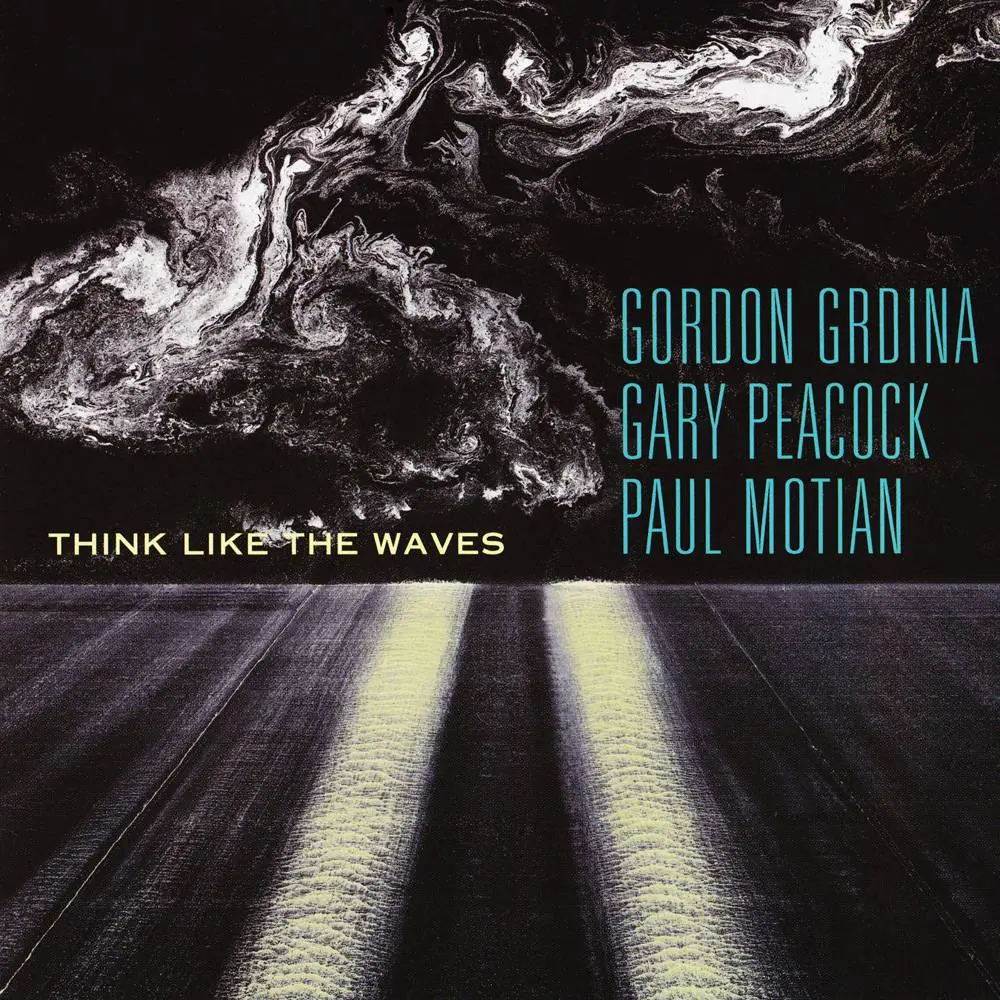
Gordon Grdina, Gary Peacock, Paul Motian – Think Like The Waves (2006) [SACD / Songlines Recordings – SGL SA1559-2]

Gordon Grdina, Gary Peacock, Paul Motian - Think Like The Waves (2006)

Title: Gordon Grdina, Gary Peacock, Paul Motian – Think Like The Waves (2006)
Genre: Jazz
Format: MCH SACD ISO + DSF DSD64 + Hi-Res FLAC

The young, Vancouver guitarist and oud player Gordon Grdina sought out Gary Peacock after a Keith Jarrett concert in San Francisco in 2000, and for the next five years Gary became his mentor and teacher. At their last meeting at Gary’s house in upstate New York there was virtually no discussion, they just sessioned together for an hour or so, and the next day Gordon asked Gary if he would do a trio record. Gary agreed, and helped bring Paul Motian (another of Gordon’s musical heroes) into the picture. Recorded in Brooklyn in January, Think Like the Waves is a remarkable international jazz debut, full of compelling original tunes by Grdina and deep interaction by the trio.

It’s not every jazz musician who doubles on guitar and oud (the centuries-old Middle Eastern forerunner of the mandolin), but Gordon Grdina makes the combination work. He brought 14 difficult originals to the studio for a recording session with veterans Gary Peacock and Paul Motian, drawing on his interest in blending elements of Arabic music and various jazz genres. When Grdina is playing oud, the songs often seem like they evolved spontaneously in the studio, especially the meandering “Platform” and the dark “Renunciation.” On guitar, Grdina’s gift for spaciousness and lyricism in the longing “Distant” sounds reminiscent of Jim Hall. The brooding “Cobble Hill” is another striking performance. While Peacock and Motian had their work cut out for them engaging this music, they provide terrific interaction with Gordon Grdina throughout the sessions.

(more…)

2 min read

Golden Earring – Naked III: Live At The Panama (2005) [SACD / Universal – 987 021-9]

Golden Earring - Naked III: Live At The Panama (2005)

Title: Golden Earring – Naked III: Live At The Panama (2005)
Genre: Classical
Format: MCH SACD ISO + DSF DSD64 + Hi-Res FLAC

Best known in the U.S. for their hard rock material, Golden Earring have been the most popular homegrown band in the Netherlands since the mid-’60s, when they were primarily a pop group.

(more…)

1 min read

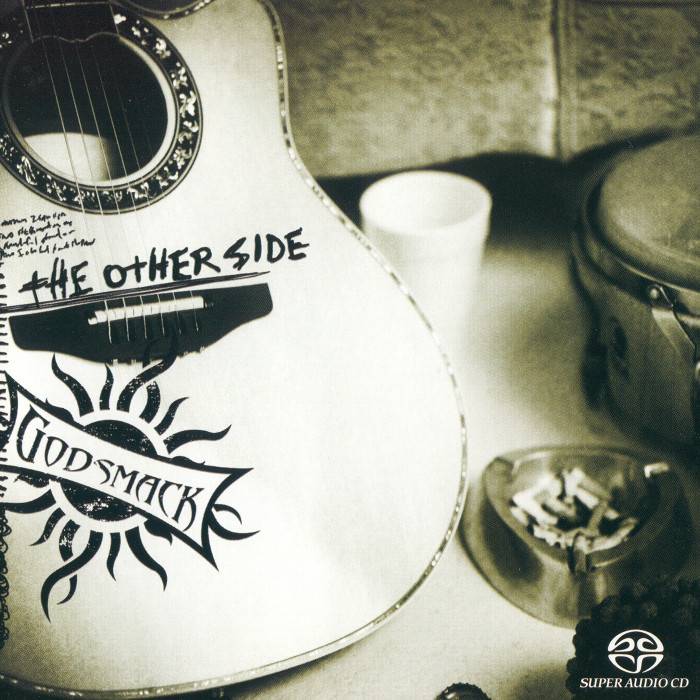
Godsmack – The Other Side (2004) [SACD / Universal Records – B0002401-36]

Godsmack - The Other Side (2004)

Title: Godsmack – The Other Side (2004)
Genre: Rock
Format: MCH SACD ISO + DSF DSD64 + Hi-Res FLAC

The Other Side is an acoustic EP by the American rock band Godsmack. It includes several previously released songs re-recorded as acoustic versions, as well as three new acoustic tracks. The Other Side was recorded in a Hawaiian studio with producer David Bottrill, who worked with the band early. This album has been certified Gold by the RIAA.

The Other Side is Godsmack’s first acoustic offering. Totaling seven songs, it’s not quite a full album. But fans will note its mixture old and new material, as well as the departure from Sully Erna and co.’s normal metallurgical sonic signature. The primary influence here is Alice in Chains. New track “Running Blind” is dominated by the high-low harmony sound that’s become Alice in Chains’ legacy, as is “Re-Align,” which otherwise doesn’t drift very far from Faceless’ electrified version. The guitars – and guitar solos – are acoustic throughout Other Side, and the percussion is lighter and more refined than the normal ‘Smack pummel. As for the rest of the new material, “Voices” suggests the more subdued work of the band’s peers (Seether, Staind, etc.), while “Touché” crosses threads of the Allman Brothers with the usual post-grunge throttle. It’s also a little free advertising for Erna’s vanity imprint and its new signing, Dropbox, whose Lee Richards and John Kosco guest. In a way, The Other Side feels like a vanity project for Godsmack itself, the sort of thing a band releases in between official studio records, or just because it can. But that doesn’t mean it’s a bad trip for fans, who will no doubt get a kick out of this more jangly side of a band that’s made a tidy career out of going for the jugular.

(more…)

2 min read

Dorothee Oberlinger, Ensemble 1700 – G.F. Handel: Sonatas For The Recorder (2007) [SACD / Marc Aurel Edition – MA SA 024]

Dorothee Oberlinger, Ensemble 1700 - G.F. Handel: Sonatas For The Recorder (2007)

Title: Dorothee Oberlinger, Ensemble 1700 – G.F. Handel: Sonatas For The Recorder (2007)
Genre: Classical
Format: MCH SACD ISO + Hi-Res FLAC

Review by Blair Sanderson For its authentic instrumental timbres, exquisite period interpretations, superbly engineered sound, and, above all, the sheer genius of the music, this album of Handel’s recorder trios and sonatas is guaranteed to please connoisseurs of Baroque chamber music, and should catapult Dorothee Oberlinger and her handpicked Ensemble 1700 into international celebrity. A debut release for these exceptional musicians, this remarkable CD reveals both their scrupulous scholarship and enthusiastic participation, and the combination is winning. Oberlinger plays the recorder with a lucid but modest tone, never upstaging the other players but creating an impression of domestic intimacy that surely attended amateur performances in the eighteenth century. Yet these are not fragile or rarefied renditions, for Oberlinger and her companions are quite vigorous in the Allegro movements; the long, lyrical lines in the Larghettos and Adagios are always solidly supported through the soloist’s unerring ornamentation; and the accompaniment is fully realized and strongly characterized, distributed throughout the works to a variety of basso continuo instruments. The illustrated booklet includes an informative essay on the recorder’s history and Handel’s music by Gerhard Braun, and the recording is absolutely clear in details and natural in reproduction. This disc is highly recommended. allmusicguide

(more…)

2 min read

Fury In The Slaughterhouse – The Color Fury (2002) [SACD / EMI Electrola – 7243 5 40046 2 9]

Fury In The Slaughterhouse - The Color Fury (2002)

Title: Fury In The Slaughterhouse – The Color Fury (2002)
Genre: Rock
Format: MCH SACD ISO + DSF DSD64 + Hi-Res FLAC

Fury in the Slaughterhouse is a rock band from Hannover, Germany, founded in 1987 and disbanded in 2008, before reforming in 2013 and again in 2016. The Color Fury is the band’s ninth studio album.

Fury in the Slaughterhouse is Germany’s equivalent of U2. While FITS is not stylistically similar to U2, they’re a big rock & roll band that commands the same respect in their native country that U2 does in Ireland. Fury in the Slaughterhouse is a hitmaker as well, topping compatriots the Scorpions as Germany’s most popular group and selling over 600,000 records by the early ’90s. Fury in the Slaughterhouse formed in a small backyard in Hanover, Germany, in 1987 by brothers Kai Uwe Wingenfelder (vocals) and Thorsten Wingenfelder (guitar, vocals). The siblings then added Rainer Schumann (drums), Christof Stein (guitar), and Hannes Schafer (bass). Fury in the Slaughterhouse’s self-titled debut LP was released on January 10, 1989; keyboardist Gero Drnek also joined the band that year. Fury in the Slaughterhouse immediately became veterans of the club circuit, gaining new converts that would eventually propel the group to superstar status. The band opened for acclaimed international talent like the Pogues and the Jesus & Mary Chain, creating foreign interest in their music. On February 15, 1994, Fury in the Slaughterhouse finally received exposure overseas as the group’s fourth album, Mono, was distributed in the U.S. by RCA Records. “Every Generation Got Its Own Disease,” a solemn statement about AIDS, was played on modern rock stations and MTV in America. Thanks to Thorsten’s ethereal, meditative riffs, Kai’s gruff vocals, and vividly bleak imagery (such as “Change the girls like underwear/Using bodies without care/The love has gone and what we’ve got/Is sweet perfume of sex and blood”), such a relatively mellow song was able to break the stranglehold of grunge on alternative radio. However, “When I’m Dead and Gone,” which had a video directed by Cyndi Lauper, wasn’t as widely accepted, and Mono vanished into the cutout bins. Nevertheless, the Furies continued to record albums in Germany.

(more…)

2 min read

Berliner Philharmoniker, Wiener Philharmoniker, Wilhelm Furtwangler – Bruckner: Symphony No.4; Wagner: Parsifal (2016) [SACD / Praga Digitals – PRD/DSD 350 130]

Berliner Philharmoniker, Wiener Philharmoniker, Wilhelm Furtwangler - Bruckner: Symphony No.4; Wagner: Parsifal (2016)

Title: Berliner Philharmoniker, Wiener Philharmoniker, Wilhelm Furtwangler – Bruckner: Symphony No.4; Wagner: Parsifal (2016)
Genre: Classical
Format: SACD ISO

Recorded in 1951, this recording features Wilhelm Furtwängler leading the Wiener Philharmoniker in one of the most infamous readings of Bruckner’s Symphony No.4. The legendary maestro is also joined by the Berlin Philharmonic for the Good Friday Music from Wagner’s Parsifal.

(more…)

1 min read

Fumiaki Miyamoto – Hommage Au Bleu (2000) [Japan] [SACD / Sony Records – SRGR738]

Fumiaki Miyamoto - Hommage Au Bleu (2000) [Japan]

Title: Fumiaki Miyamoto – Hommage Au Bleu (2000) [Japan]
Genre: Classical
Format: SACD ISO + DSF DSD64 + Hi-Res FLAC

Fumiaki Miyamoto (宮本文昭) is a Japanese classical oboist and conductor. He’s began his worldwide career at the age of 18, when he moved to Germany to study under Helmut Winschermann. He played in the municipal symphony orchestra in Essen, the Frankfurt Broadcast Symphony Orchestra, and then Cologne Broadcast Symphony Orchestra; he was the first Japanese oboist to hold first chair in Europe. He continued to live there until the year 2000, in which he returned to Japan. He has released several albums, not only in classical but also in pop fields like jazz, film music.

(more…)

1 min read

Beethoven Orchester Bonn, Stefan Blunier – Franz Schreker: Irrelohe, Opera In 3 Acts (2011) [SACD / MDG Live – 937 1687-6]

Beethoven Orchester Bonn, Stefan Blunier - Franz Schreker: Irrelohe, Opera In 3 Acts (2011)

Title: Beethoven Orchester Bonn, Stefan Blunier – Franz Schreker: Irrelohe, Opera In 3 Acts (2011)
Genre: Classical
Format: MCH SACD ISO + Hi-Res FLAC

Franz Schreker (originally Schrecker, March 23, 1878 – March 21, 1934) was an Austrian composer, conductor, teacher and administrator. Primarily a composer of operas, his style is characterized by aesthetic plurality (a mixture of Romanticism, Naturalism, Symbolism, Impressionism, Expressionism and Neue Sachlichkeit), timbral experimentation, strategies of extended tonality and conception of total music theatre into the narrative of 20th-century music. The opera was first performed on 27 March 1924 at the Stadttheater Köln, conducted by Otto Klemperer. Productions in a further seven cities followed (including Stuttgart, Frankfurt and Leipzig), but critical response was mixed and, together with changing audience tastes and the complexity of the score, the work failed to maintain its place in the repertoire. The first production in modern times was at the Bielefeld Opera in 1985. The work was also staged at the Vienna Volksoper in 2004 and at the Bonn Opera in 2010. Wikipedia

The operas of Franz Schreker (1874-1934), composed during the early years of the 20th century and once as popular as those of Richard Strauss, quickly disappeared from the musical scene. This was not only due to the composer’s death in 1934, but also the rise of National Socialism in Germany. The latter precipitated the composer’s dismissal from his teaching post at the Hochschule für Musik in Berlin in 1932, and probably also contributed Schrecker’s early demise from a stroke. Thanks to his Jewish heritage, Schreker’s compositions were characterised as ‘Entartete Musik’ (degenerate music) by the Nazis and his music like that of his near contemporaries, Zemlinsky, and Korngold and many other non -Aryan composers, were banned. In recent years, however, there has been a welcome if somewhat fitful re-kindling of interest in Schreker’s music. A number of the composer’s nine operas have been recorded and also received stagings, predominantly but not exclusively in Europe. These include ‘Der ferne Klang’ (1910), ‘Die Gezeichneten (1915), ‘Der Schatzgräber (1918) and ‘Irrelohe’ – premiered in 1924 in Cologne and conducted by Otto Klemperer. The music of the earlier operas mentioned above is characterised by lush harmonies and opulent orchestration – a heady mix of Puccini, Richard Strauss and the impressionism of Debussy. In ‘Irrelohe’ Schreker moves to a much more chromatic and contrapuntal style spiced with a little dissonance, and this is just one of the reasons why the opera was not well received by audiences and critics in 1924. Falling between two stools, the music was too decadent for progressives and too harmonically adventurous for conservatives. The orchestral forces involved are exceptionally lavish. In addition to a large compliment of strings, wind and brass there is a percussion section that includes two sets of timpani, three anvils, glockenspiel and xylophone. An on-stage orchestra consisting of two piccolos, two clarinets, six horns, three trumpets, percussion, bells and organ completes the line-up. The complex Gothic plot involving rape, madness and murder is typical of Schrecker’s febrile imagination and, for those attuned to late-romantic and expressionist opera, the work’s blend of blatant eroticism and verismo excess make for an intoxicating aural experience. Schreker is a master at creating atmosphere and much of the finest music in the opera is to be found in the many long orchestral passages in each of the three acts. The glittering and iridescent orchestral colours constantly beguile the ear while the ‘sehnsucht’ of the ecstatic vocal lines in the Act 2 scene between Eva and Heinrich echo Wagner’s Tristan und Isolde. This MDG recording stems from recent live performances given at Theater Bonn (November 2-3,5,7, 2010) where the current Generalintendant Klaus Wiese seems to be spearheading a fresh revival of Schrecker’s stage works – a new production of ‘Der ferne Klang’ is scheduled for the 2011/12 Season. The performance by the Bonn company is very fine indeed. The opera’s two main protagonists are thrillingly sung by Ingeborg Greiner (Eva) and Roman Sadnik (Heinrich) who cope valiantly with their demanding roles, and Mark Rosenthal makes a most effective Christobald. The many lesser roles are also well sung. The playing of the Beethoven Orchestra Bonn under Stefan Blunier is magnificently full blooded and finely etched. Blumier relishes the score’s sumptuous textures yet, in spite of Schrecker’s heavy orchestration, he manages to keep instrumental lines clear. Two small caveats to this set must be mentioned. First the 75-page booklet included with the discs contains a proselytising essay on the work by Janine Ortiz, biographies of the singers and an Act by Act synopsis of the story, but – and it is very big but – a libretto in German only. Unless you are a fluent German reader the action will often be difficult to follow thanks, not least, to the opera’s labyrinthine plot. Secondly, each of the opera’s three Acts is allotted a separate disc. This does obviate the problem of choosing a suitable break (the Sony two-disc CD set from 1995 was particularly unfortunate in that respect), but it does also have a cost implication – three full-price discs instead of two for an opera lasting 127’ 50”. The vivid MDG recording is slightly distanced, so the volume needs to be increased considerably for its fine qualities to become evident. Balances between voices and orchestra are excellent, and for those listening in multi-channel the surround speakers have been used to great effect for the off-stage brass, distant bells and chorus in the Act 3 cataclysmic immolation of Irrelohe castle. There is no applause or audience noise but the movement of singers on the stage is clearly defined with very few extraneous sounds being captured by the microphones. This is latest addition to the Schrecker discography will be welcomed by all admirers of the composer and can be confidently recommended.

(more…)

5 min read

Fritz Reiner, Chicago Symphony Orchestra – Beethoven: Symphonies & Overtures [Japan 3xSACD] (2018) [SACD / Sony Classical – SICC 10257~9]

Fritz Reiner, Chicago Symphony Orchestra - Beethoven: Symphonies & Overtures [Japan 3xSACD] (2018)

Title: Fritz Reiner, Chicago Symphony Orchestra – Beethoven: Symphonies & Overtures [Japan 3xSACD] (2018)
Genre: Classical
Format: SACD ISO + Hi-Res FLAC

Fritz Reiner, the famous Hungarian conductor who as the music director of the Chicago Symphony Orchestra brought the 1st golden age to the Symphony. Its achievements have dramatically improved the standards of orchestra performance in the 20th century. These outstanding performances were recorded by RCA’s state-of-the-art recording technology of “Living Stereo” & still retain the overwhelming freshness.

This SACD is a compilation of all the stereo recordings of Beethoven’s symphony that Reiner released with the Chicago Symphony. Reiner took up all the Beethoven symphonies during the Chicago era, but only 6 of them were recorded, & here there are 5 except for the monophonic recording No. 3 “Hero” in almost the chronological order… The rigid & supple Beethoven interpretation that emerges from the extremely small & precise command has established its own position even in the middle of the 20th century when the masters of individuality emerged. The 1st & 9th are remixes & remasters for the 1st time in almost 20 years; the 5th, 6th, & 7th are remixes & remasters for the 1st time in 15 years and the world’s firstst SACD release.

(more…)

2 min read